
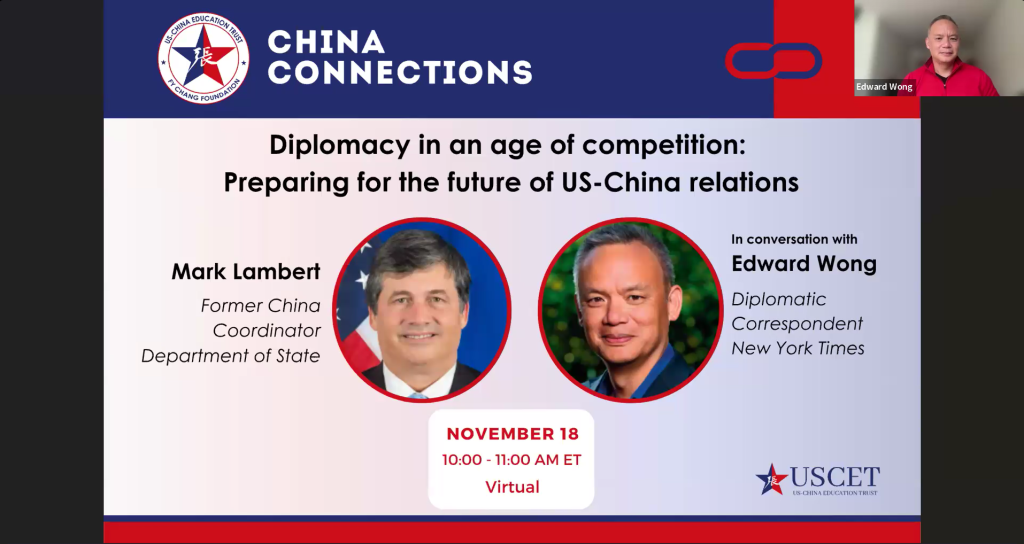
On November 18, 2025, USCET hosted “Diplomacy in an Age of Competition: Preparing for the Future of U.S.–China Relations,” featuring former Deputy Assistant Secretary of State Mark Lambert in conversation with veteran diplomatic correspondent at the New York Times Edward Wong. Ambassador Julia Chang Bloch delivered the opening remarks for this webinar, which was part of USCET’s China Connections series.
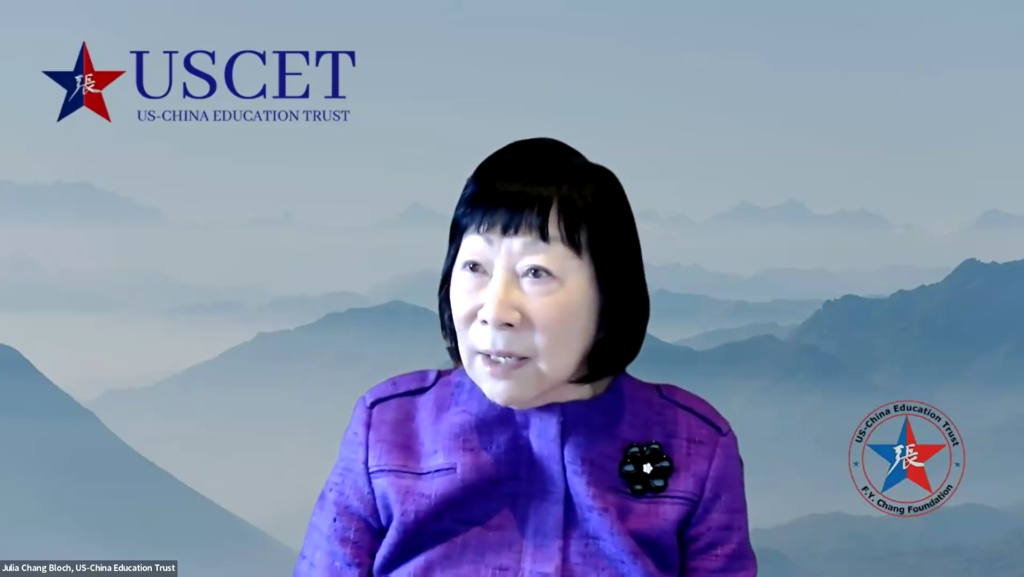
Ambassador Bloch highlighted how diplomacy — once the stabilizing force in U.S.–China relations — has been weakened amid today’s climate of mistrust, disinformation, and strategic competition. She emphasized that the core challenge is not whether the U.S. and China will compete — competition is assured — but whether the two powers can manage that competition without conflict. She framed the webinar around the urgent question of how to rebuild practices of communication and channels of trust at a time when these mechanisms have eroded. The discussion, she stressed, was equally about the future: how the next generation of diplomats and China specialists can sustain curiosity, integrity, and purpose amid shrinking exposure, political polarization, and a climate of pervasive suspicion. Her remarks set the tone for a conversation centered not only on policy, but on the practice and future of diplomacy itself.
“The challenge today is not whether the United States and China will compete… but whether we can manage that competition without conflict and still find room for cooperation on shared global challenges.”
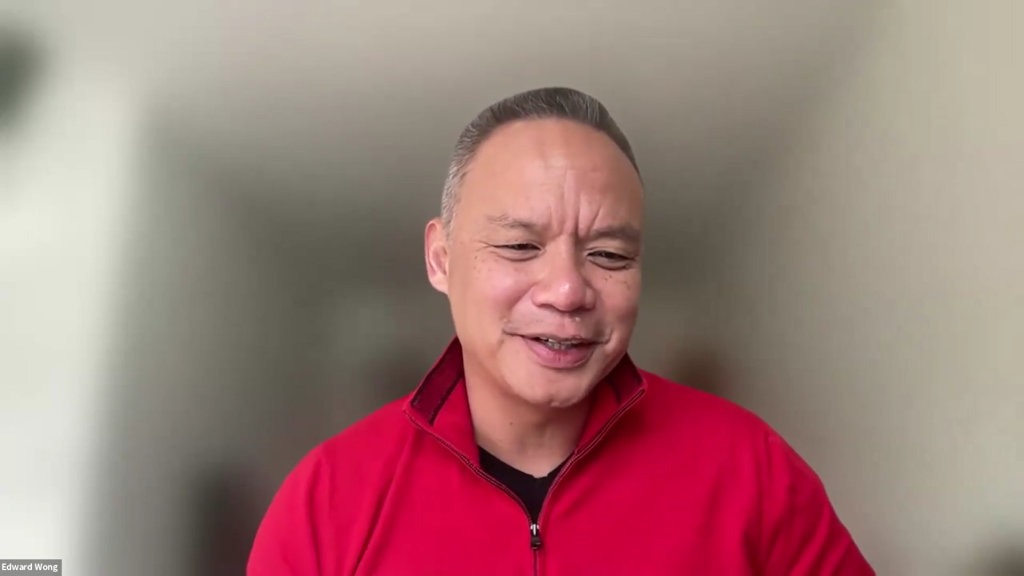
Wong introduced Lambert by tracing his 35-year career across Asia, including assignments in China, Japan, Korea, Vietnam, Thailand, and Iraq, as well as his leadership of “China House,” the State Department’s cross-bureau effort to coordinate China policy. Lambert began by recounting his early years as a diplomat in China in the late 1990s, a period he characterized as remarkably optimistic. Beijing at the time was bustling with journalists, entrepreneurs, academics, and young officials, all excited by China’s efforts to enter the World Trade Organization and its rapid integration into the post-war world order. Although human rights concerns remained acute — a topic Lambert himself covered — the prevailing mood, especially within diplomatic and business circles, was that deepened engagement would benefit both sides.
“There was a sense that the world was going to benefit from China’s ascension… You look at today and… there are more contradictions, more “maoduns”(矛盾) in the relationship.”
Contrasting that era with the present, Lambert described a fundamental shift in both China’s internal trajectory and the tenor of the bilateral relationship. Under President Xi Jinping, he argued, China’s policymaking has become more ideological and security-centric. Entrepreneurs once celebrated for driving economic growth now face political marginalization; ideological campaigns and tightened controls have impeded academic and civil-society collaboration; and Beijing’s policymaking has become more opaque, centralized, and risk-averse. Externally, China’s rapid military expansion and its assertiveness in the South China Sea, East China Sea, and across the Taiwan Strait have redefined the regional security landscape. Lambert underscored that these military developments are not merely symbolic but materially shape day-to-day diplomacy by increasing the risk of miscalculation and conflict.
“China is… at least in terms of number of hulls, the largest navy in the world… it has acted like a bully with many of its neighbors, not just in Southeast Asia but with the Japanese, with the Koreans, with Taiwan.”

The conversation centered on the merging of economic and security issues. Lambert explained that technologies such as semiconductors, AI, quantum computing, and biotechnology now have direct military implications, making traditional distinctions between economic engagement and national security increasingly unrealistic. He noted that this shift has led to the adoption of “economic security” as a guiding framework for U.S. policy, reflected in targeted export controls designed to prevent American innovation from strengthening China’s military modernization. Meanwhile, Lambert also expressed concern about the lack of consistent strategies and communication around tariffs and export rules under the Trump administration, arguing that this unpredictability complicates planning for U.S. businesses and allies alike.
“When the Chinese are reverse-engineering golf club technology, that doesn’t pose the same threat as when it works on AI, or lithium batteries, or other things. These things can be weaponized. And to put it bluntly, we should not be helping the Chinese develop technologies that can be weaponized to kill Americans or kill American allies.”
During the Q&A, the audience raised a contentious question: how does China interpret recent U.S. efforts to strengthen alliances and create new mechanisms to contain China’s growth and influence? Lambert accepted that Beijing often frames these developments as evidence of “containment,” but maintained that U.S. actions are intended to prevent conflict, not constrain China’s peaceful development. He stressed that Washington must communicate this clearly, particularly because tensions in areas such as the South China Sea could easily trigger treaty commitments — especially with the Philippines — if China makes a miscalculation. He cited conversations in Beijing where he warned Chinese officials that aggressive moves against allied states could inadvertently activate defense obligations, resulting in outcomes neither side desires.
Another question raised was China’s use of leverage. Lambert reminded the audience that Beijing has previously weaponized rare earth exports — notably against Japan — and could do so again as global supply-chain diversification remains years away. He explained that China is not reluctant to exploit asymmetric dependencies, making it vital for the U.S. and its partners to accelerate resilience efforts and to find sustainable suppliers who would not become a security threat. The discussion also touched on deteriorating China–Japan relations, with Lambert noting that Chinese economic pressure, diplomatic rhetoric, and historical grievances have strained ties despite robust economic interdependence.
Lambert also offered a window into the daily realities of diplomacy. He described the challenges of gaining meaningful access to officials within the Chinese system, especially the People’s Liberation Army (PLA), whose “external affairs officers” often have limited insight into internal military thinking. Retired PLA officers, he noted, can be more candid, though the core of elite decision-making — including the question of whom Xi Jinping listens to — remains deeply opaque. Nonetheless, he emphasized the relationship-driven nature of diplomacy in Asia, where decades-long personal connections often allow for more honest and productive exchanges.
“You really have to get to know other people… It’s easy to say promote mutual understanding. That’s a hard thing to do.”
Audience questions brought the discussion to the future of the Foreign Service and the next generation of China specialists. Lambert spoke frankly about discriminatory barriers that Chinese American diplomats frequently face when seeking China-related assignments or security clearances, describing such obstacles as “abhorrent” and harmful to U.S. interests. He also noted a worrying decline in American scholars pursuing field research in China due to access challenges and fears about how such experience might affect future government employment, and not receiving the required security clearances. He argued that this trend risks leaving the U.S. without a deep bench of China expertise at the very moment when a nuanced understanding is most essential. Lambert stresses the need for clarity and coherence in the rules of security clearance screens to help professionals navigate their careers and studies.
“Let’s not soft-sell it. It’s a tough time… I have never seen the Foreign Service under attack the way it has been… But the pendulum of history swings, and I am confident we are going to come to our senses and recognize… we do have global responsibilities. We need people to be conversant and to be employed in promoting our country’s interests.”
Yet, even amid these challenges, Lambert reiterated the enduring importance of diplomacy as both a profession and a principle. Exchanges between Americans and Chinese — whether through education, culture, or multilateral dialogue — remain essential for fostering understanding and avoiding conflict. The session closed with reflections from Rosie Levine, USCET’s executive director, who underscored the mission of the China Connections series: providing students and emerging professionals opportunities to learn directly from practitioners and to engage thoughtfully with one of the most consequential bilateral relationships in the world.
Speaker Biographies
Speaker
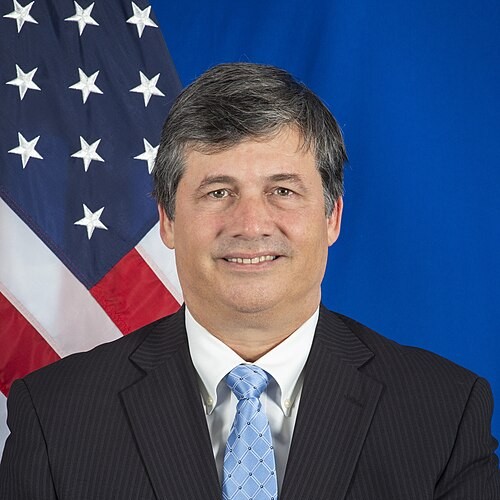
Mark Baxter Lambert is the former State Department China Coordinator and Deputy Assistant Secretary in the Bureau of East Asia and Pacific Affairs. Previously, he served as Deputy Assistant Secretary for Japan, Korea, Mongolia, Australia, New Zealand, and the Pacific Islands. In 2020, Mark established the International Organizations Bureau’s office, aimed at protecting the UN’s integrity from authoritarianism. Throughout his career, managing political and military affairs, he has navigated high-risk crises and situations in places such as the South China Sea, the Taiwan Strait, and the Korean Peninsula. Mark has also brought Vietnam and Thailand closer to the U.S. through strategy and implementation.
Mark received a Meritorious Presidential Rank Award for helping with a plan to elect the leader of the World Intellectual Property Organization. He has also been awarded for his efforts bringing the U.S. and Vietnam closer, for his voluntary efforts responding to the 2011 Fukushima Daiichi nuclear disaster, for helping to shape the U.S. response to the 2004 Indian Ocean Tsunami, and for his work helping to resolve the 2001 EP-3 crisis involving a U.S. naval aircraft forced down on China’s Hainan Island. He received his bachelor’s degree in history and political science from Willamette University and Juris Doctor from Baylor Law School.
Moderator
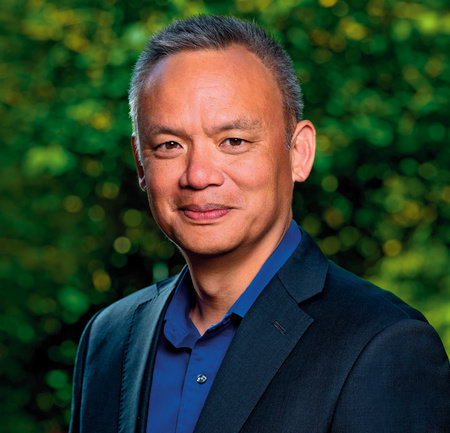
Edward Wong is a diplomatic correspondent for the New York Times, reporting on global affairs, U.S. foreign policy, and the State Department. The issues he covers range from espionage to economic competition to environmental crises, while the multipolar world, authoritarian states, wars, and superpower rivalries involving the U.S. are his current focus. Previously, he was a China correspondent and Beijing bureau chief for nearly a decade. He is also the author of At the Edge of Empire: A Family’s Reckoning with China, a collection of memoir and reportage telling the story of modern China.
Early in his career, Edward received a Livingston Award and was on a team of Pulitzer Prize finalists for his war coverage in Iraq during the height of the conflict from 2003-07. He graduated from the University of Virginia with a bachelor’s degree in English Literature and from U.C. Berkeley with joint master’s degrees in journalism and international studies. He studied Mandarin at Beijing Language and Culture University, Taiwan University, and Middlebury College.
China Connections
Why should Americans be interested in China? USCET launches China Connections, a new monthly series hosting discussions with experts to explore their work, gain insights into current events, and learn what a career in the China field looks like today. These events highlight individuals with unique expertise on China to provide students, young professionals, and members of the public a deeper understanding of current events and increase American student interest in pursuing a focus on China. These events are mostly held in person at George Washington University with online engagement.