
On December 17, 2025, USCET convened Session 1 of the 18th American Studies Network (ASN) Conference, titled “Memory and Legacies: 80 Years of the U.S.-China Alliance in World War II.” This landmark event brought together a distinguished group of historians, diplomats, filmmakers, and cultural scholars to examine the complex legacy of the wartime alliance. Ambassador Julia Chang Bloch, founding president of USCET, delivered opening remarks, setting the stage for a discussion that bridged the historical “forgotten ally” narrative with the urgent geopolitical realities of today.
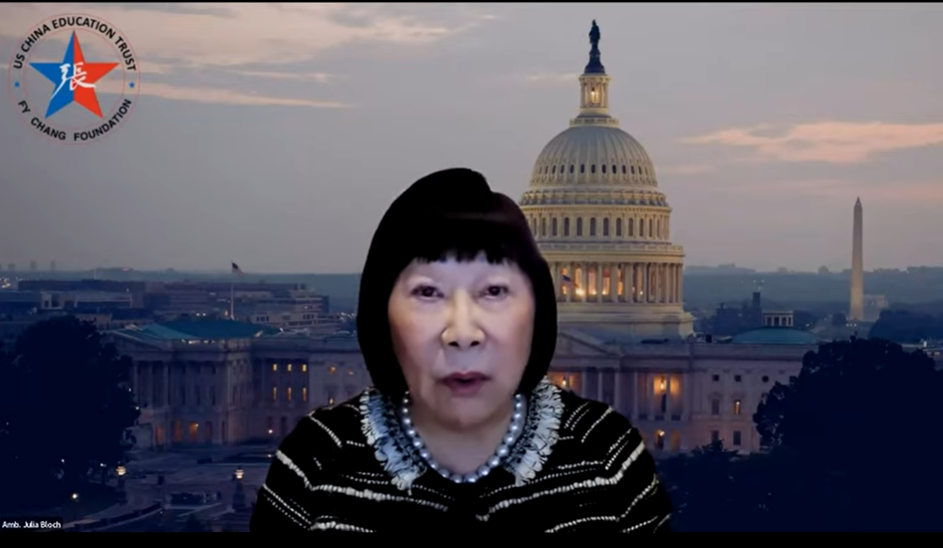
Ambassador Bloch opened the proceedings by characterizing the current U.S.-China relationship as “fragile and complex,” noting that while recent high-level engagements, including a call between President Xi Jinping and President Donald Trump, signal a potential rapprochement, the foundational ties between the two nations are strained. She drew a contrast between how the two countries remember the war: in the United States, the Asian theater is largely an “afterthought” overshadowed by the victory in Europe, while in China, the “narrative of resilience and victory over Japanese aggression is deeply embedded in its national consciousness,” serving as a touchstone for demands of respect and historical justice. Ambassador Bloch also issued a warning regarding the decline in the educational exchange that once underpinned bilateral trust. She noted that while Chinese student numbers in the U.S. have dropped to 265,000 from a peak of over 370,000, the collapse of American students in China is even more precipitous — falling from approximately 15,000 a decade ago to only about 1,000 today. This staggering decline threatens to leave America without a generation of China experts, especially when they are needed most to navigate the precarious geopolitical landscape.
“If we can remember not only what divided us but also what once united us, it may yet help guide us through the uncertainties of the years to come.”
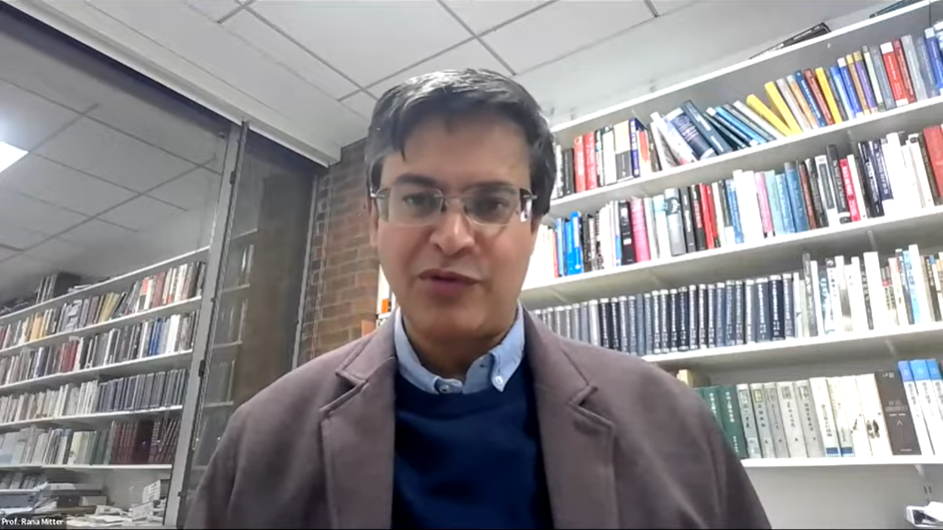
Rana Mitter, the S.T. Lee Chair in U.S.-Asia Relations at the Harvard Kennedy School, delivered the keynote speech. Mitter addressed the theme of China as the “Forgotten Ally,” arguing that Western historiography has systematically marginalized China’s role despite it being the primary theater of resistance in Asia for years before Pearl Harbor. He presented a visual history of the war’s transformative impact on China’s global status, highlighting the 1943 Cairo Conference as a pivotal moment where Chiang Kai-shek appeared as an equal alongside Franklin D. Roosevelt and Winston Churchill. Mitter posited that this moment marked the end of the “Century of Humiliation” and the beginning of China’s rise as a global power, culminating in China becoming the first signatory to the United Nations Charter — a fact heavily emphasized in modern Chinese museums to legitimize the country’s current international standing.
Mitter also detailed the horrific human cost often glossed over in Western accounts, such as the bombing of Chongqing and the Henan famine, noting that the war created a refugee crisis involving up to 100 million people. He explained how memory of the war within China has shifted from a Mao-era narrative that focused solely on Communist guerrilla warfare to a more comprehensive historiography that rehabilitates the Nationalist (KMT) government’s role in the frontline battles, directly confronting the aggressive force of the Imperial Japanese Army.
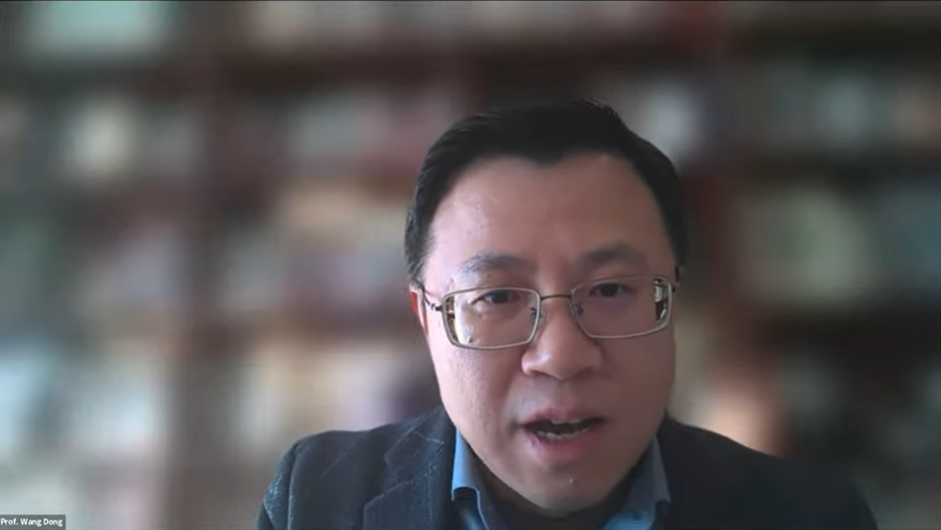
Following the keynote, Wang Dong, executive director of the Institute for Global Cooperation and Understanding at Peking University, joined Professor Mitter for a fireside chat, during which he emphasized that for both China and the United States, World War II constitutes a fundamental pillar of national identity and visions of the international order rather than a mere military episode. The two scholars engaged in a critical discussion on “periodization,” agreeing that Western historiography’s tendency to mark the war’s beginning with the 1939 invasion of Poland structurally marginalizes China; instead, they argued for recognizing 1937 or 1931 as the true starting points to grant the “right sort of recognition” to China’s role.
Wang posited that the war is a cornerstone of “historical justice” and that preserving the post-war international order is inextricably linked to honoring China’s sacrifice, a narrative he noted is increasingly “anchored” in museums to weave a story of national suffering, unity, and rejuvenation. Mitter added that recent Chinese exhibits link the 1945 victory to China’s global status as the first signatory to the UN Charter. Toward the end, Wang highlighted a recent phone call between President Xi Jinping and President Donald Trump as evidence of a “convergence” in how both leaders value this shared history as a foundation for managing future competition.
“We should realize the value of that system [of collective security]. Where it has gone wrong… we should mend it. But we should not end that system… that is a job for all of us on every single continent.”
The program then transitioned to a panel discussion titled “Remembering World War II Across the Pacific,” moderated by Melinda Liu, Beijing Bureau Chief for Newsweek. The panel featured Emily Matson (George Washington University), Shirley Sun (Filmmaker), Zhao Mei (Chinese Academy of Social Sciences), and Zhu Hua (Shanghai Ocean University). The discussion explored how cultural products, including film, literature, and museums, shape public memory more powerfully than academic texts.
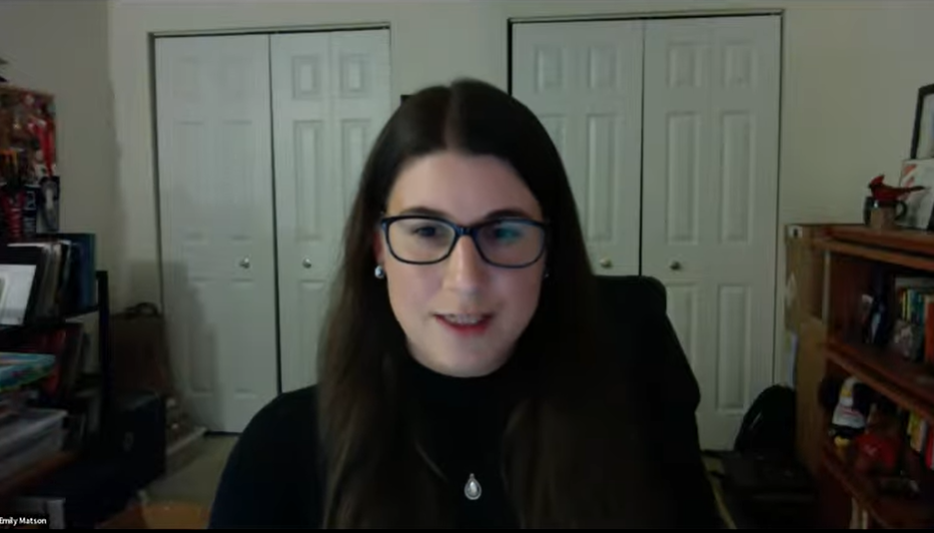
Emily Matson highlighted the persistent influence of Cold War narratives on American popular culture. She cited the example of the Marvel Cinematic Universe, noting that characters like Captain America are framed as defeating fascism, yet the storylines often segue directly from fighting Nazis to fighting Soviet-esque villains, erasing the WWII alliance with the Soviet Union and China entirely. Matson argued that while China views WWII as its “Good War” of national rejuvenation, the U.S. narrative is inextricably linked to the “Greatest Generation” mythos, which centers almost exclusively on American agency in Europe and the Pacific.
“I would agree that diverging nationalist narratives and geopolitical concerns… often take precedence… not just in the U.S. and China, in every country, really, over… historical veracity and objectivity.”
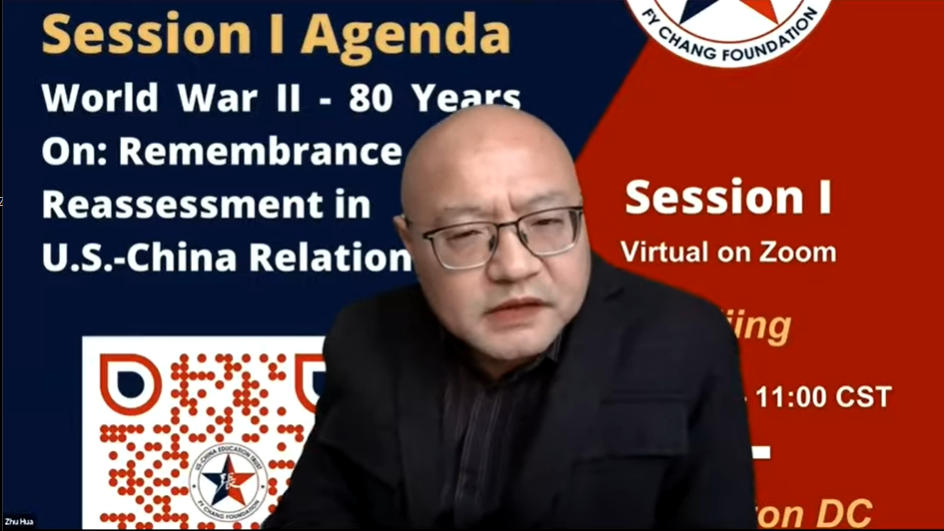
Zhu Hua turned the conversation to literature, specifically the impact of Pearl S. Buck. He noted that while Buck is less celebrated today, her work — and the film adaptations like Dragon Seed — played a critical diplomatic role in the 1940s by humanizing the Chinese struggle for American audiences. Zhu argued that cultural products create the “grassroots” understanding of history, which often diverges from the nuanced views of scholars. He suggested that despite current political tensions, “safe” historical topics like the Flying Tigers remain effective bridges for mutual understanding because they transcend factional politics and offer a clear narrative of heroism and cooperation.
“The educated people have already understood the history between the two countries. In fact, the blind spot is among the common people. They receive whatever from the media… they do not read. They just watch.”
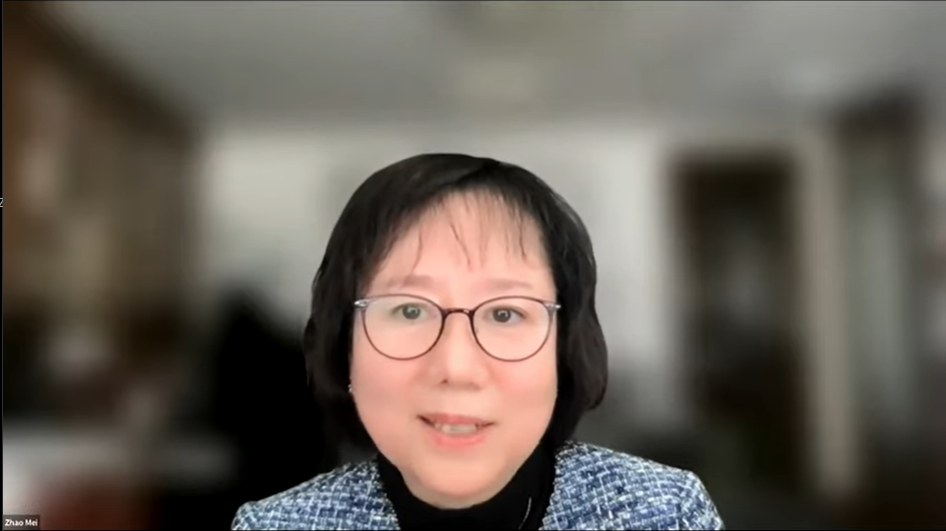
Zhao Mei offered a perspective from within the Chinese education system, describing how narratives of the Flying Tigers and “flying the Hump” remain significant in her undergraduate courses on Sino-U.S. relations. She also shared her anecdote from a visit to Dayton, Ohio, in the 1980s, where a waitress expected her to look like a character from Buck’s The Good Earth. It was a moment that revealed how cultural products can both build bridges and entrench stereotypes. Zhao emphasized that these historical bonds culminate in a “touching story” that scholars must actively preserve. She argued that maintaining these historical memories is essential for fostering the dialogue needed to stabilize the current relationship.
“The Chinese people will forever remember the history of China and [the] United States joined hands… and we express the gratitude to American friends who made selfless contributions, and even sacrificed their lives… ”
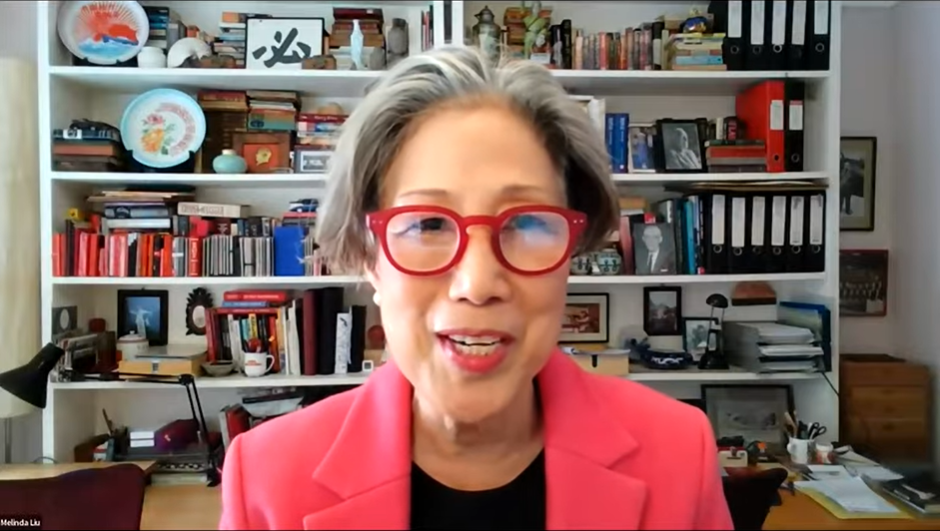
The divergence between “flashy” history and “authentic” history was a central theme. Melinda Liu shared a moving personal story about her father, an aeronautical engineer who acted as an interpreter for the Doolittle Raiders after they bailed out over China in 1942. She contrasted the fame of the “sexy” Flying Tigers — with their shark-nosed planes and leather jackets — against the devastating, often ignored reality of the ground war. Liu reminded the audience that the Chinese rescue of the Doolittle Raiders prompted a retaliatory campaign by the Japanese military involving biological warfare that killed an estimated 250,000 Chinese civilians — a horrific cost of the alliance that is rarely discussed in the West.
“They actually placed… food items and clothing and things infected with anthrax, cholera… so that… terrible epidemics broke out…”
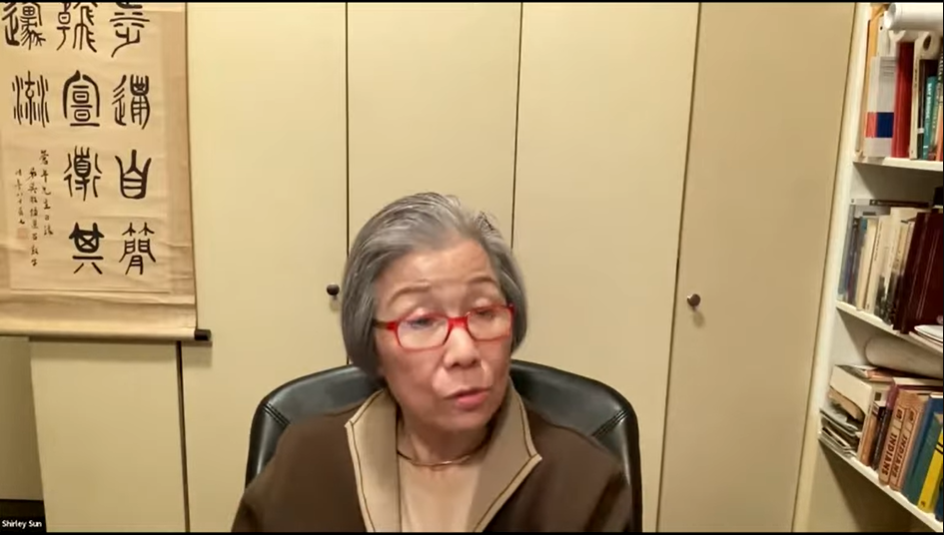
Filmmaker Shirley Sun elaborated on the challenges of bringing authentic history to the screen. She described her experience pitching her documentary on General Joseph Stilwell to Hollywood studios, only to be rejected because the story was considered boring and lacked sensational drama. This refusal led her to the documentary format to preserve the historical truth of Stilwell’s friction with Chiang Kai-shek and his deep respect for the Chinese soldier. Sun also stressed the importance of primary research, recounting how she accessed Stilwell’s personal diaries and Chinese notebooks through her friendship with his daughters, Nancy and Allison. Sun also shared a behind-the-scenes anecdote about the film’s narrator, Dan Rather. She recalled that Rather initially recorded the narration in his booming “anchorman” voice. When she asked him to instead “tell it as a story to your grandchildren,” He changed his tone to one of intimacy and warmth, insisting he would not leave the studio until she was completely satisfied.
“I went there… and they all said, ‘Oh, it’s a downer’… Hollywood films, you can’t have a downer… [They said] ‘We will introduce a love interest’… I said, ‘Absolutely not’… So then, I turned to documentaries.”
The conference closed with a reflection on the future of U.S.-China relations. Responding to a question about whether history is repeating itself in current global conflicts, the panelists agreed that while the geography and circumstances differ, the core lesson of the WWII alliance remains relevant: that even amidst political differences, cooperation is possible when facing a common existential threat. As the ASN prepares for the second part of this conference series in early 2026, the session served as a reminder that maintaining the “educational bridge” and accurate historical memory is not merely an academic exercise but an imperative for peace.