
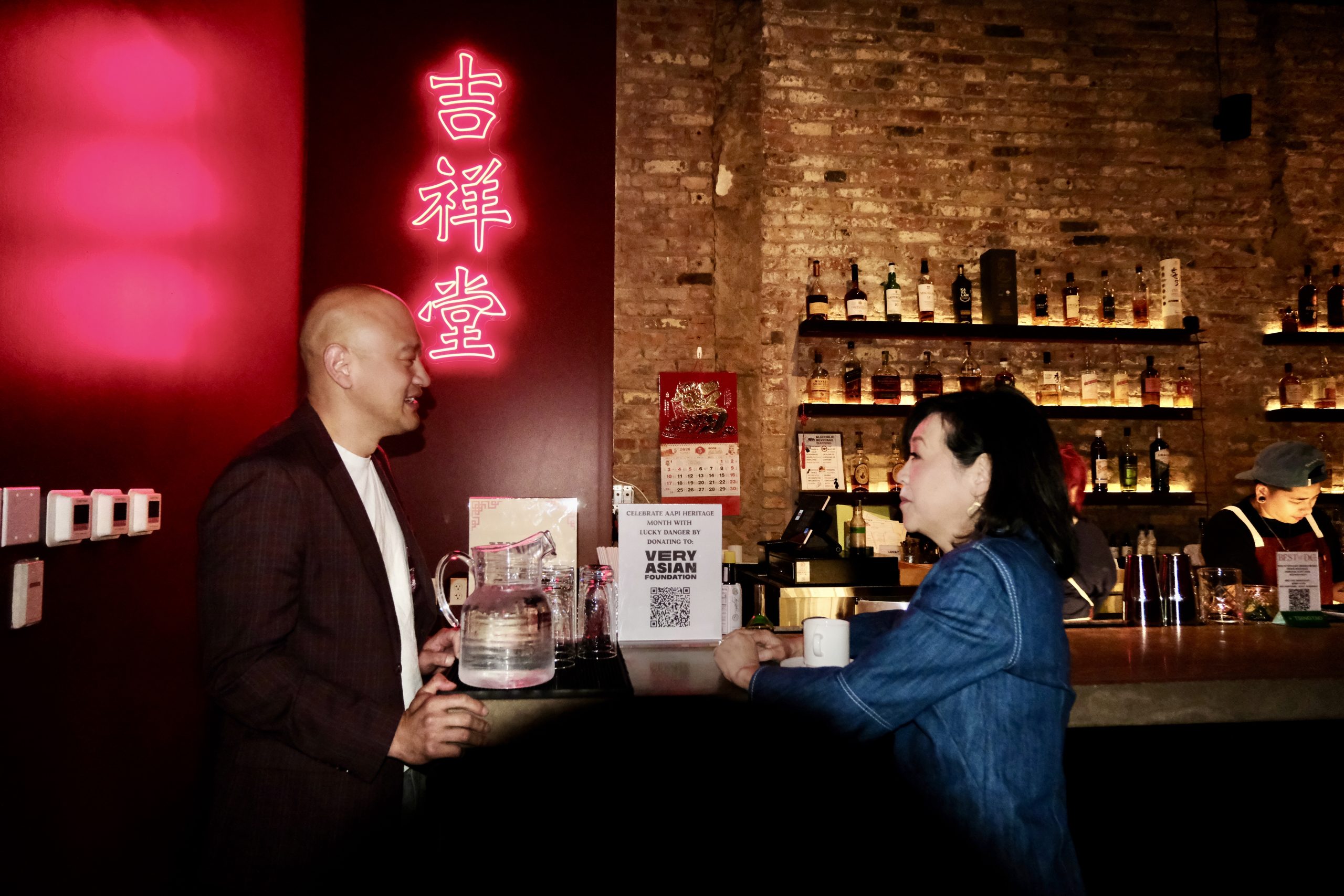
On May 14, USCET gathered an intimate group of guests at Lucky Danger, Chef Tim Ma‘s celebrated restaurant in Penn Quarter Chinatown, for an evening conversation that wove together food, family, and the complexities of Chinese American identity. The event, held in honor of AAPI Heritage Month as part of the USCET Salon Series, featured a moderated conversation between chef Tim Ma and Chinese American broadcast journalist Joie Chen, followed by a tasting of Ma’s latest culinary creations.
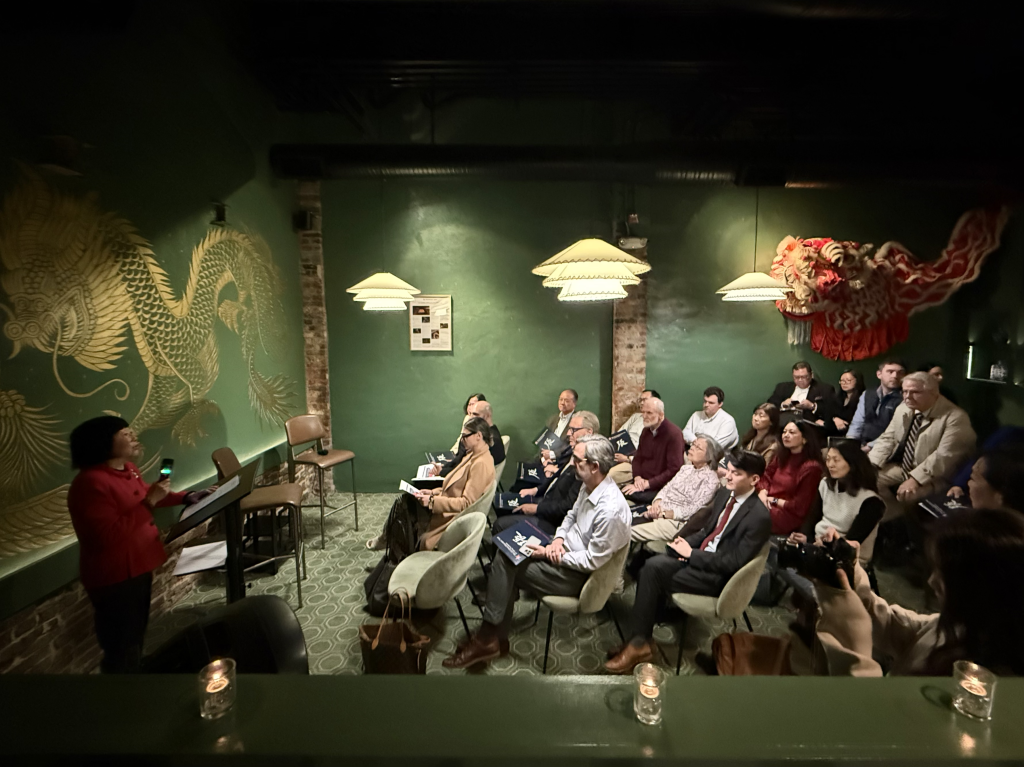
The evening opened with remarks from Ambassador Julia Chang Bloch, USCET founder and Executive Chair, who welcomed guests and framed the gathering as an expression of gratitude to the friends and partners who sustain USCET’s work. Drawing on her own family’s experience — her mother had supported the family by waiting tables, and they later owned restaurants after arriving in San Francisco — she reflected on what restaurants have long meant to immigrant communities: places of survival, resilience, and reinvention, and among the earliest spaces where American curiosity about Chinese culture found a welcome.
The conversation between Tim Ma and Joie Chen was wide-ranging: Ma traced his unlikely path from electrical engineering degrees at Georgia Tech and Johns Hopkins to the French Culinary Institute, training at two-Michelin-starred Momofuku Ko, discovering his first restaurant for sale on Craigslist and buying it. But the evening’s deeper current ran beneath his professional career. Ma’s family has deep roots in the Chinese restaurant business in America, exemplified by his family restaurant heirlooms making their way into the Smithsonian’s National Museum of American History. Ma spoke candidly about growing up as one of the only Chinese families in Arkansas, raised by parents who had made a pragmatic decision: to bring their children up American. He did not learn Mandarin, nor did he grow up fluent in Chinese customs or culture. The distance that was created has never fully closed, and it has never stopped mattering.
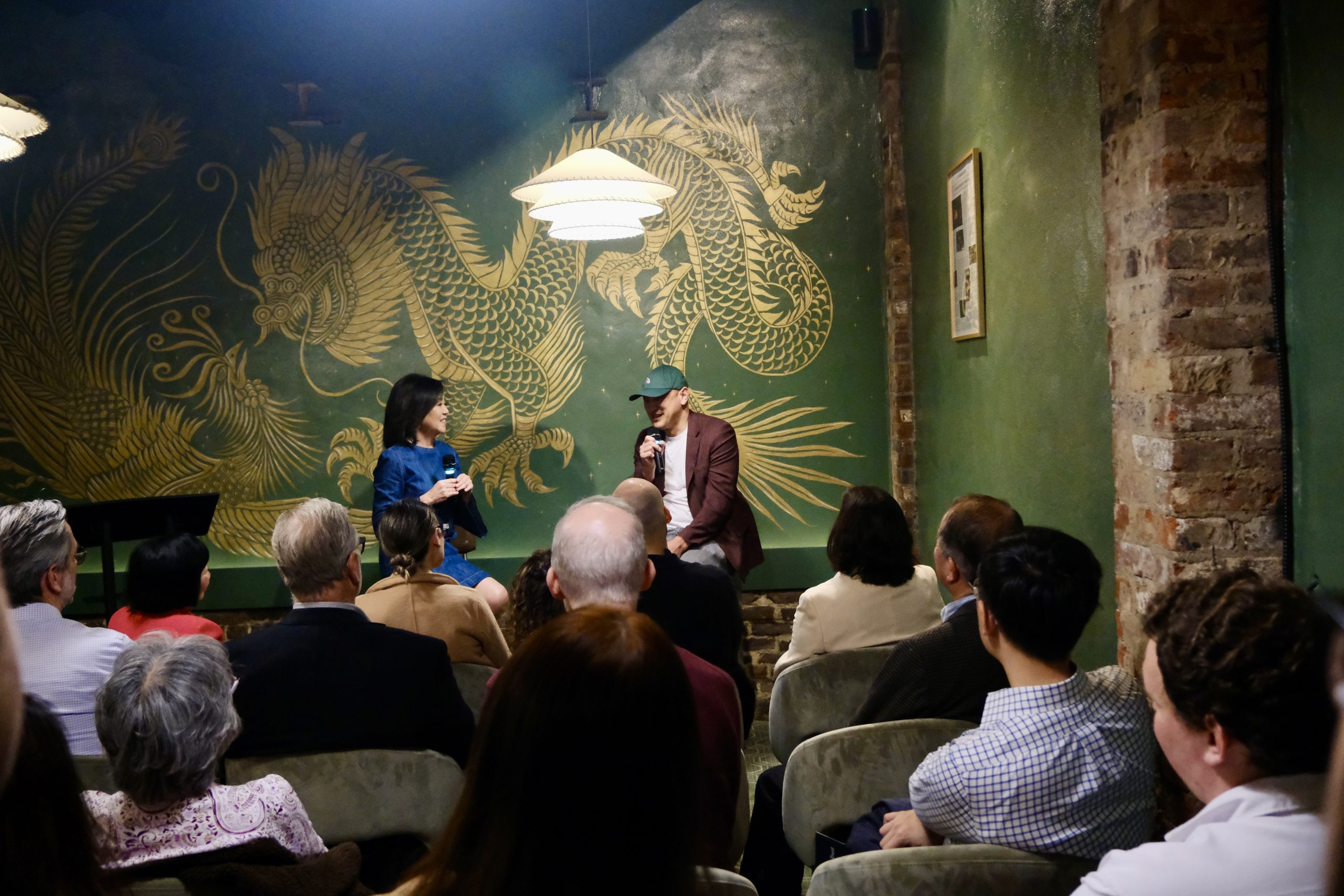
It is that gap, Ma explained, that has most directly shaped the restaurants he has built. Concepts like Lucky Danger and Any Day Now are not simply culinary projects — they are an effort to construct, in public, the cultural identity he was not handed in private. The goal is not to invoke nostalgia or manifest authenticity in any narrow sense, but something more generous: to create spaces where the Asian American experience can be seen, tasted, and shared across generations. Ma spoke with particular passion about Chinatowns: their precariousness, irreplaceability, and the urgency of preserving them not as tourist attractions but as living communities. His restaurants, he suggested, are part of that same instinct: to hold something together before it disappears.
A thread that ran throughout the evening was the relationship between food, memory, and frugality. Through her expert moderation, Joie Chen drew on her own upbringing to open the subject: recalling her mother for whom wasting food was simply unthinkable, a sensibility that resonated with many in the room. Ma took up the thread readily, describing how that same ethos to tackle food waste had followed him from the family table into the professional kitchen: rooftop gardens, composting systems, sourcing practices designed to close the loop between what is grown and what is served. What began as a deeply personal inheritance, he noted, also turned out to be sound business logic.
“It’s also a business decision: the more we waste, the less we profit”.
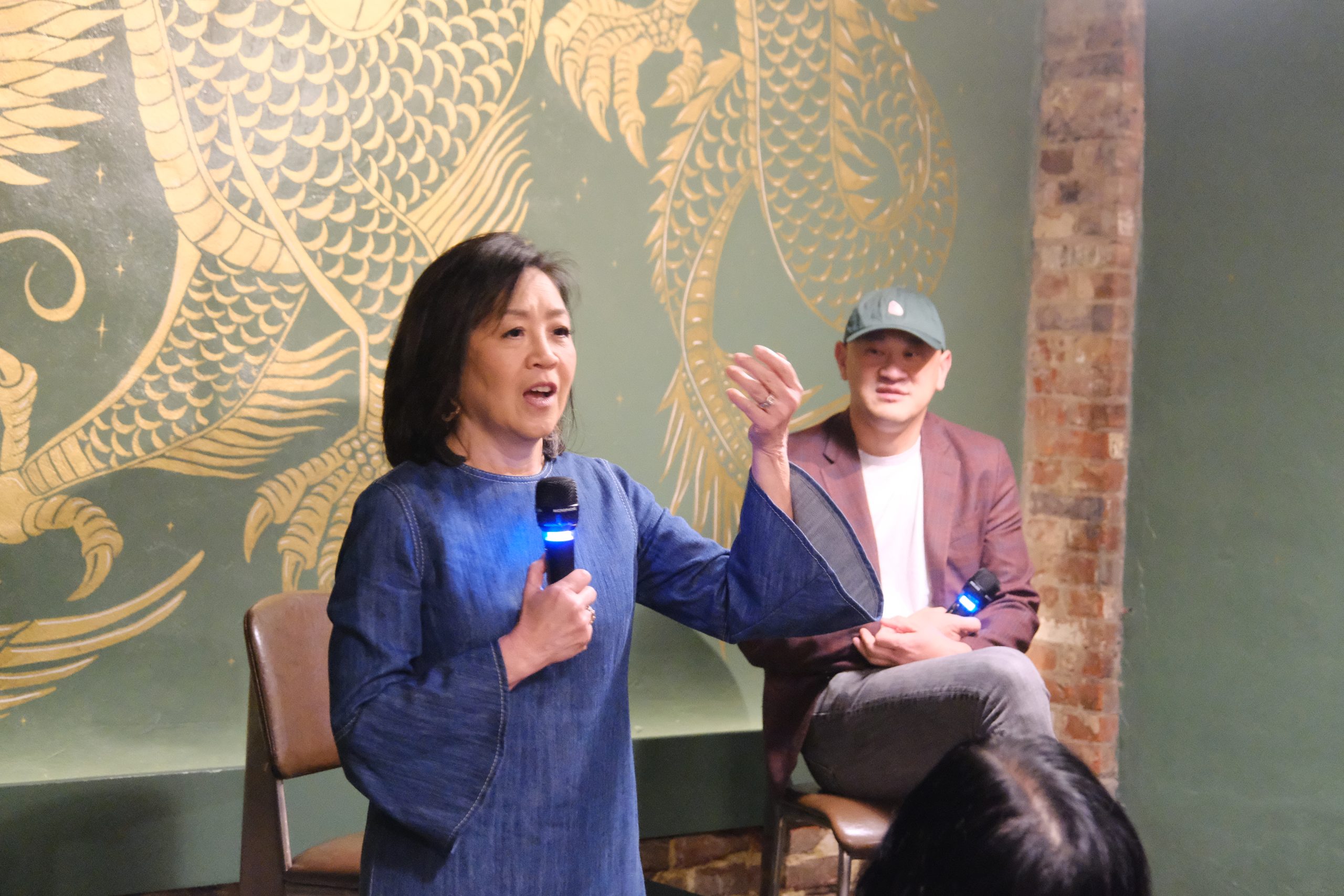
Ma also reflected on the weight of public visibility as an AAPI figure and what it means to feel a sense of responsibility toward a community with which one’s own relationship has been complicated. That tension came into sharp focus in 2021 during COVID-19, when he co-founded Chefs Stopping AAPI Hate in the wake of a surge in anti-Asian violence. The initiative mobilized restaurants and chefs across the country, organizing fundraising dinners and night markets that raised over $500,000 for AAPI organizations and communities. The effort drew national attention and earned Ma recognition extending well beyond the culinary world — a reminder, he noted, that the restaurant industry carries real cultural and civic weight, and that chefs are positioned to use it.
The moderated conversation gave way to an open Q&A that extended many of the evening’s threads into more personal territory. Guests raised questions about identity and belonging, about the tensions that arise when public advocacy runs ahead of private certainty, and about what it would take to ensure that younger Chinese Americans inherit something richer than the cultural distancing Ma’s own generation has often experienced.
The evening closed with brief remarks from USCET Managing Director Ryan McElveen, who reflected on a full spring of programming — the launch of USCET’s salons series and distinguished speaker series, the release of USCET’s working group report on America’s China talent challenge, and a new Resource Hub for U.S. academic travel to China — before previewing an ambitious fall ahead, including an inaugural Study Tour to Yunnan, the American Studies Network Conference at Fudan University, and the September launch of Friends of USCET.
The evening concluded with a tasting of dishes from Lucky Danger’s current menu, giving guests the chance to experience firsthand the kind of cultural synthesis the conversation had explored.
Speaker Biographies
Speaker
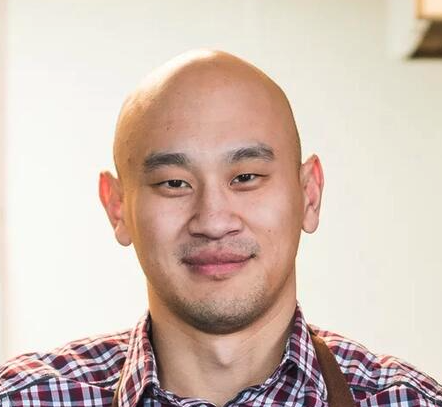
Tim Ma is a Washington, DC–based chef and restaurateur.Tim Ma is a Washington, DC–based chef and restaurateur. After earning degrees in electrical engineering from Georgia Tech and Johns Hopkins University, he left a successful engineering career to attend the French Culinary Institute, subsequently training at two-Michelin-starred Momofuku Ko. He has since opened over 20 restaurant concepts across the DMV, including Lucky Danger and Any Day Now, which draw on his Chinese American heritage. In 2021, he co-founded Chefs Stopping AAPI Hate, a nonprofit that has raised over $500,000 to combat AAPI discrimination. His family’s restaurant heirlooms are part of the Smithsonian National Museum of American History’s permanent collection.
Moderator
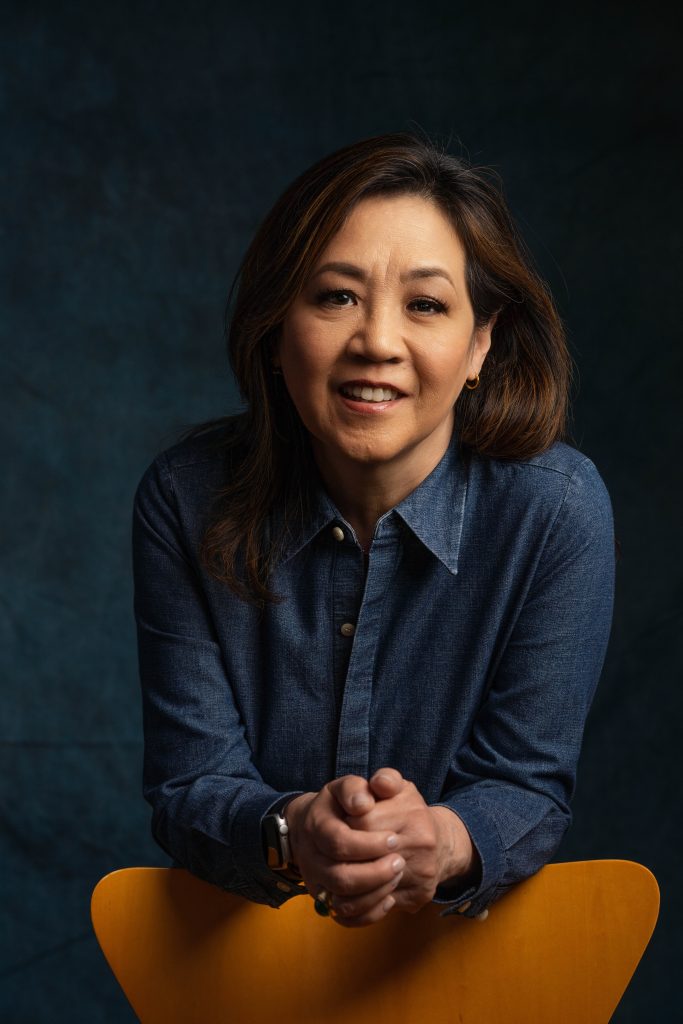
Joie Chen is an Asian American television journalist and has worked for a number of networks, including CNN, CBS, and Al Jazeera America. Chen was the first Asian American to anchor a primetime news hour on cable television. She has won many awards for her work, including two national Emmy awards. Chen earned her bachelor’s and master’s degrees in journalism from the Medill School of Journalism at Northwestern University. During her time at CNN, she covered some of the United States’ most well known events, including 9/11, the Olympic Park bombing, and the Columbine shootings. Chen created CNN’s first interactive news program, News Site with Joie Chen. Chen worked as a CBS White House and Capitol Hill correspondent, covering three presidential summit meetings and several presidential campaigns, and hosted other political events. She was a regular contributor to CBS Sunday Morning. Chen covered the 2002 Beltway sniper attacks and was ranked as one of the 50 most visible network correspondents, the only minority female on the list. Chen is a former senior advisor and faculty member at the Poynter Institute for Media Studies. She is an active member of the Asian American Journalists Association (AAJA) and was the founding president of its Atlanta Chapter.