
On the morning of May 4, USCET hosted the virtual event launch for the new Resource Hub for U.S. Academic Travel to China, featuring a panel discussion that brought together a wide-ranging group of voices, from an undergraduate university student to a China scholar, to examine the state of American study and research in China.
USCET’s Executive Director Rosie Levine opened the event by highlighting the stakes: fewer than 2,000 Americans are currently studying in China as a result of a confluence of factors: a more closed research environment in China, deteriorating geopolitics, the closure of Chinese programs and institutions, the drying up of dedicated funding streams, and the lack of vetted information about what pathways still exist. Against this backdrop, she introduced the Resource Hub as a direct response — the first widely available platform to share best practices and practical information on academic travel to China today.
Amy Gadsden, associate vice provost for global initiatives at the University of Pennsylvania, delivered the event’s keynote address by anchoring her remarks in a lifetime of visiting the country. She first traveled to China in 1990, then went back three years later to teach English, and then continued going back over 100 times over the course of her career. Each trip, she argued, offered something irreplaceable.

Gadsden reflected on John King Fairbank’s Chinabound: A Fifty Year Memoir about his first-hand glimpses of pre-liberation China. She also reflected on a note she had jotted down during the pandemic amid lockdowns and disruptions to travel: “Medium-to-long-term impact…what does hybridity mean in the future? Is travel mobility necessary or a luxury?” It was a question Gadsden took seriously: with technology, why bother with travel at all?
Her answer came through the accumulation of experiences that would have been impossible had she stayed home: carving watermelons and bobbing for peaches at school events; being the first Western observer of village elections; finding herself in Beijing in the summer of 2001 when the city learned it had won the bid to host the 2008 Olympics; most recently, visiting Chinese campuses to welcome Penn students on study abroad programs and joining conferences on AI. She underscored that certain types of knowledge can only be learned on the ground – these observations unlock a set of questions you would never have known to ask.
She also noted, on the anniversary of May 4th, the two-way influence between China and the West that is sometimes underappreciated. She noted that John Dewey’s impact on China is well studied, but China’s impact on Dewey is far less studied, but no less impactful. She closed with a line from Dewey himself: “To the eye of the mind, China presents the most enthralling drama now anywhere in acting.” Time physically in China, she concluded, is critical.
“Go to China. You do not want to miss the show.”
Panel Discussion and Q&A
Chloe Ross Bohn moderated the panel, drawing on her own experience as a master’s student at the Hopkins-Nanjing Center and studying in China. Chloe noted that one thing she did not expect before she arrived in China was the warmth and enthusiasm of Chinese locals in response to her Chinese language ability. It was this experience that deepened the value of showing up:
“I remember being so thrilled that all of the people I would talk to, even wandering outside campus at a coffee shop, [would express] so much excitement, eagerness and joy in those conversations.”
Amina Shafeek-Horton, an alumna of the Schwarzman Scholars program at Tsinghua University in Beijing, described her first motivation to study in China by tracing her connection to China back to age five, when she attended a Chinese language immersion school. Her most recent motivation was a desire to understand local governance in China from the inside, which drew her to the Schwarzman Scholars program, since the program specifically encouraged students to ask questions on the ground. During her time there, she visited a host family, took courses on Chinese political institutions and Chinese leadership, and built connections with a like-minded community of peers.
In response to a question on the value of China to her career, Amina was unambiguous: studying in China is more relevant than ever, and she has encountered no barriers from institutions or employers as a result of having done so.
On the question of whether to choose a long-term or short-term program, she urged self-knowledge: if building deep relationships over time matters to you, a longer program may be worth pursuing; if an opportunity presents itself through a short-term fellowship, take it.
On her own trajectory, it was too early to measure the Schwarzman experience’s full impact, but she was confident the connections she had made would prove consequential.

Carissa Qin, a rising junior at Claremont McKenna College, had taken an opportunity in the summer after her freshman year with the China Folk House to travel to China and conduct field research, supported by a scholarship. Her resulting long-form piece examined hydropower and its impact on rural communities in Yunnan Province.
In response to a question about her expectations before and after her trip, she noted that China’s diversity struck Carissa most upon arrival because it was far greater than she had anticipated. She also found herself confronted with the limits of her professional Chinese: her speaking habits carried an American grammatical logic that needed active correction. The learning curve was real, she said, but ultimately manageable with practice.
“I think just being in the environment, always interacting with the different parties, really builds up your skill quickly — and you[…]are able to mirror them.”
When reflecting on how her time in China shaped your professional path, Carissa explained that fieldwork in China does not fit neatly into her current program, but the international experience and her grounding in U.S.-China relations have reinforced her long-term aspiration to make China a part of her professional path.
Andrew Stokols, assistant professor at Singapore Management University, reflected on the relationships forged in China as the most durable outcome of his experience. He first went in 2009, an age of optimism and peak openness, and was struck by how candid and open people were. The subsequent years, seen through the lens of a deteriorating U.S.-China relationship, were demoralizing. But, in response to a question about his expectations, when Stokols returned in 2023 after a long absence, he found that the personal animosity toward Americans he might have feared simply was not there; despite his nationality and geopolitical tensions between the United States and China, he was received without hostility.
On the question of opportunities for mid-career scholars, he pointed to fellowship programs supported by the Luce Foundation and noted that Chinese institutions remain genuinely interested in hosting foreign professionals, in part because so few are coming.
Stokols closed by acknowledging that his first trip hooked him completely, and that the experience had shaped his professional life in ways he never anticipated, as it could for anyone willing to go:
“I didn’t plan on China becoming part of my professional trajectory. But sometimes it has a way of grabbing you and pulling you in.”
The richness of the panelists’ experiences prompted a lively round of questions from the live Zoom audience:
“Is being on the ground still valuable given current geopolitical tensions?”
Andrew offered cautious optimism: the dividends of exchange will not appear immediately, but he believes they accumulate. Chloe spoke to the value of presenting diverse American perspectives in Chinese academic settings: she had found that Chinese professors were genuinely surprised by her views, and she sees this kind of exchange as one avenue through which student-level contact might, over time, contribute to something larger.
“What opportunities exist for undergraduates and recent graduates?”
Chloe directed attendees to USCET’s Resource Hub. Amina named several programs specifically: The U.S. Department of State’s Critical Language Scholarship, the Blakemore Fellowship, and the National Bureau of Asian Research for language-focused opportunities; and the New York City-based China Institute for experiential programming not centered on language learning.
“Has anyone faced university clearance challenges in pursuing China study?”
Carissa acknowledged that her program was not viewed as the safest choice at the time she applied, though the climate has since shifted. Her approach was to pitch the experience through existing connections in China and to demonstrate her existing knowledge of Chinese life. The broader consensus among panelists was that having a mentor who can help you make the case is invaluable.
“What are your practical tips for students heading to China?”
Panelists underscored that the basics are important: get a Chinese phone number and set up Alipay and WeChat Pay, because cash is rarely used and cards even less so.
For more information on opportunities, challenges, and practical guidance on travel to China, explore USCET’s newly launched Resource Hub for U.S. Academic Travel to China.
Speaker Biographies
Keynote
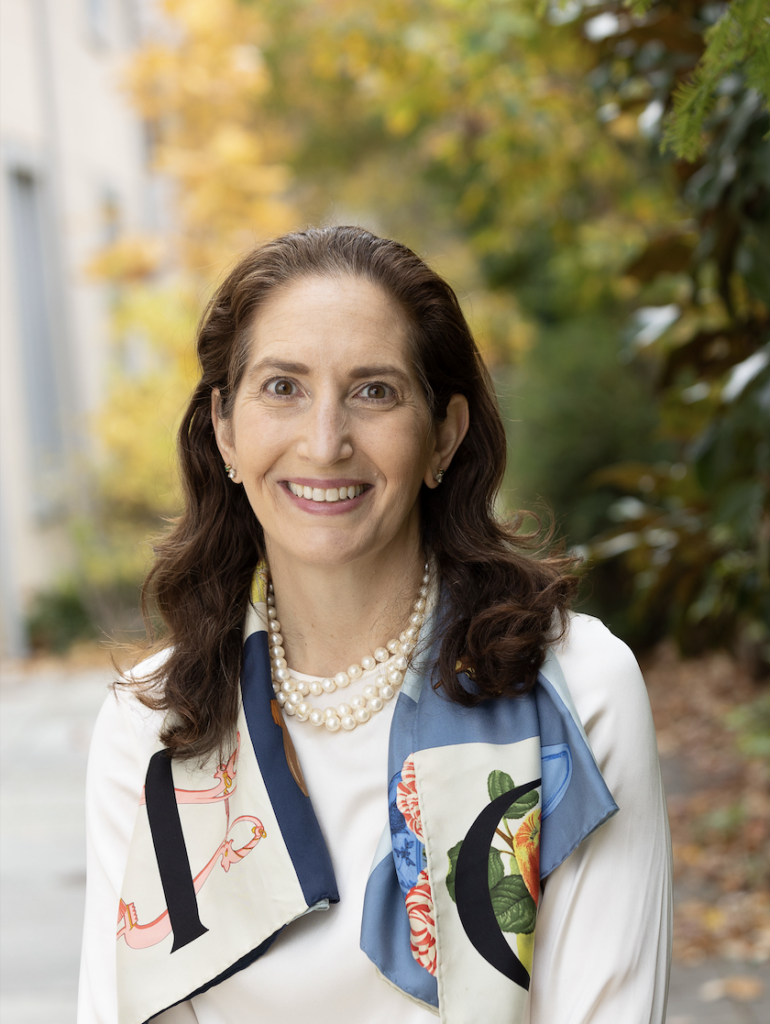
Amy Gadsden is the Associate Vice Provost for Global Initiatives at the University of Pennsylvania. Gadsden has spent more than a decade working in the foreign policy field with a focus on China. She served as a Country Director for the International Republican Institute and as a Special Advisor for China at the United States Department of State. Early in her career, she published several articles on democracy and human rights in China, documenting changes in legal and civil society reform. Dr. Gadsden was one of the first American scholars to observe and write about grassroots elections in the PRC in the mid-1990s.
She holds a B.A. from Yale College and a Ph.D. in Chinese legal history from the University of Pennsylvania and serves on the board of the William Penn Charter School.
Moderator
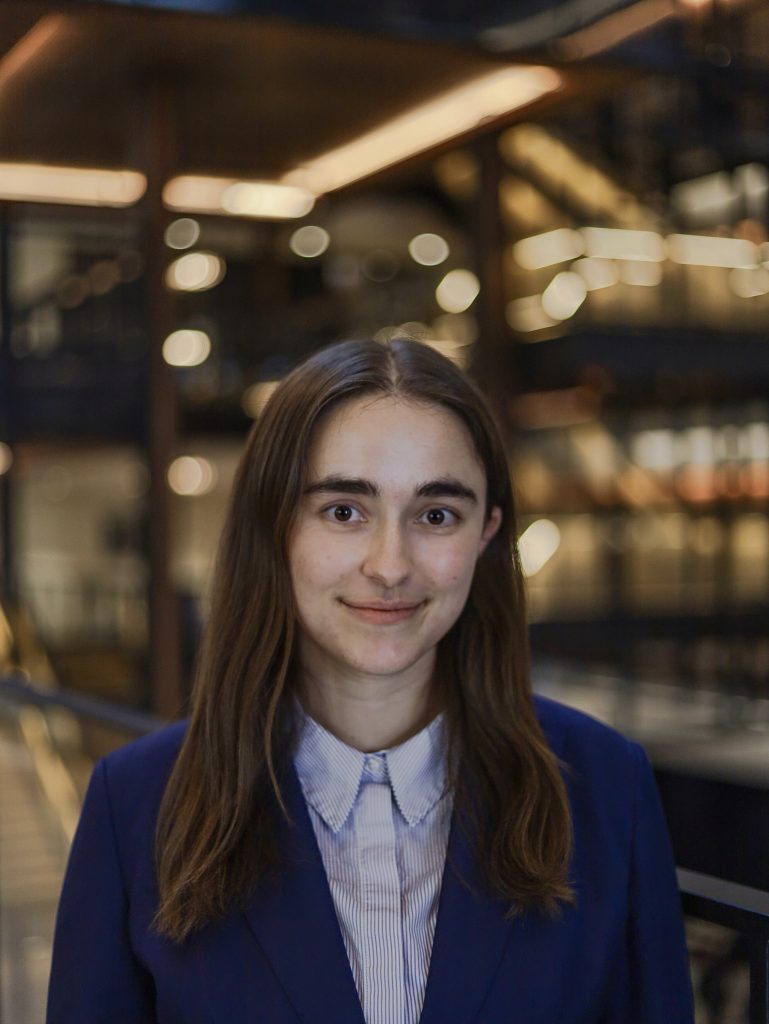
Chloe Ross Bohn is a program coordinator at the DC Coalition to End Sexual Violence. She previously worked with the U.S.-China Education Trust, where she helped develop the “Resource Hub For U.S. Academic Travel to China,” supporting U.S. students and scholars navigating academic engagement in China. Chloe holds an MA from the Johns Hopkins School of Advanced International Studies (SAIS) and studied at the Hopkins-Nanjing Center.
Panelists
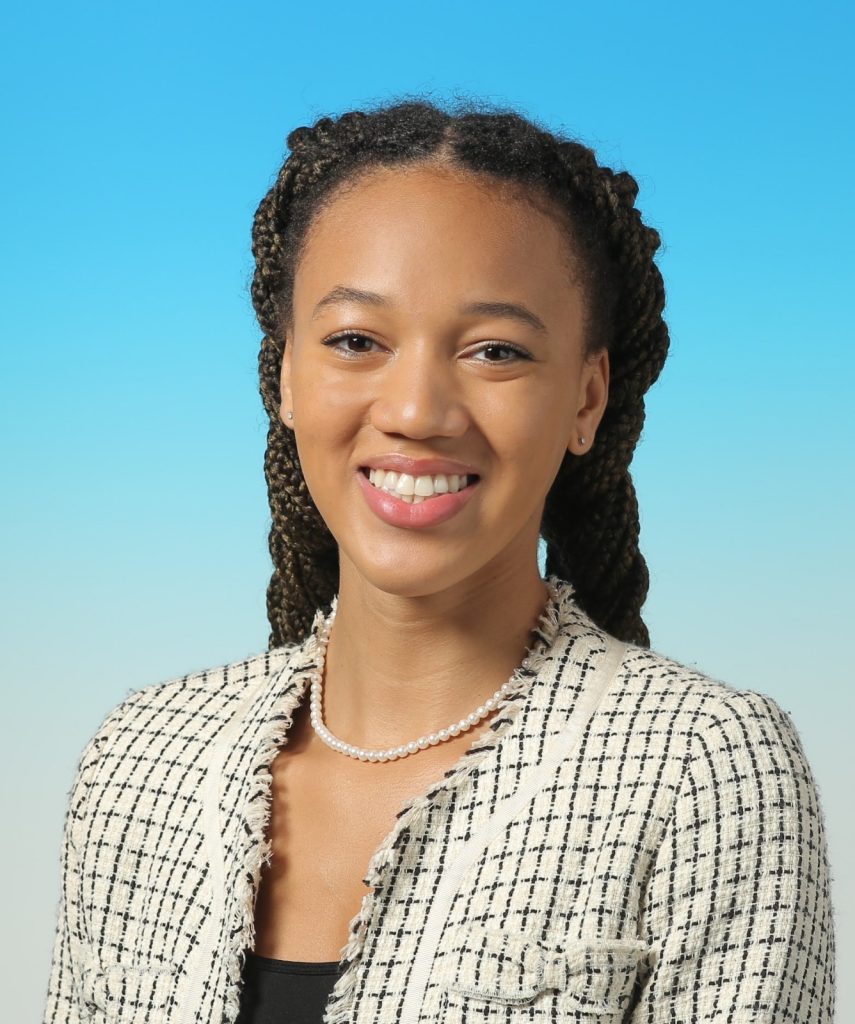
Amina Shafeek-Horton is a Schwarzman Scholar and earned a master’s degree in Global Affairs from Tsinghua University in Beijing. She holds three bachelor’s degrees in business through the World Bachelor in Business program, studying at the University of Southern California, the Hong Kong University of Science and Technology, and Bocconi University in Milan. She most recently served as a program associate at the United Nations Foundation, supporting the Council of Women World Leaders, and was a Carnegie China Young Ambassador at the Carnegie Endowment for International Peace. Her experience also includes internships with the American Chamber of Commerce in Hong Kong and Pfizer. She is fluent in Mandarin Chinese.
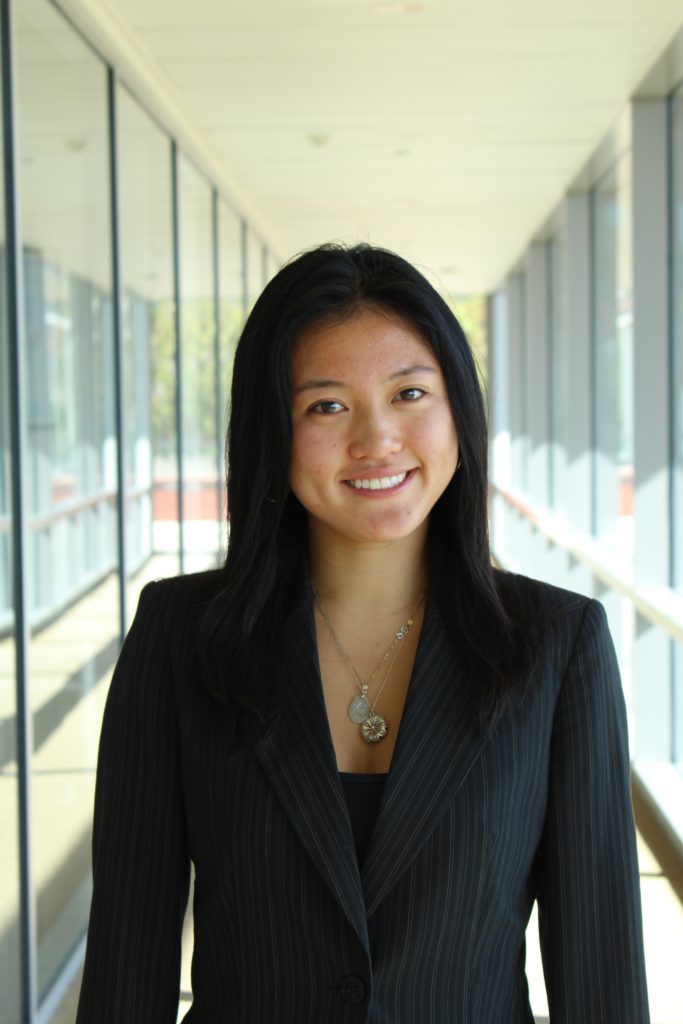
Carissa Qin is a rising junior at Claremont McKenna College pursuing a dual major in PPE (Politics, Philosophy, and Economics) and Economics. Last summer, she travelled to Yunnan, China as an Appel Fellow to conduct fieldwork as part of the China Folk House Experiential Learning Summer Program. As part of the program, she travelled throughout rural Yunnan investigating the architecture of traditional homes, cultural practices, farming, and the impact of hydropower dams.
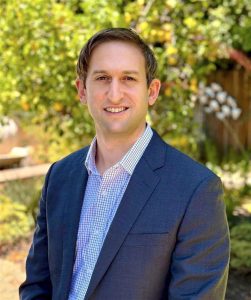
Andrew Stokols is Assistant Professor of Urban Studies and Urban Fellow (Urban Governance) at Singapore Management University.
His research examines the social and political dimensions of digital urbanism globally, with a particular focus on China and Southeast Asia. Drawing on urban theory, political economy, and science and technology studies (STS), his work explores how technology shapes urban governance and development. He also leads ongoing projects on the political economy of new city development, the geopolitics of infrastructure, state capitalism, and digital innovation policy.