
On September 8, the US-China Education Trust (USCET) hosted a briefing with the Federal Bureau of Investigation (FBI) examining how academic travel to China is considered in the U.S. government security clearance process. The program featured a recorded fireside conversation between Joshua Obstfeld, Senior Executive for External Engagement in the FBI’s Counterintelligence and Espionage Division, and Margaret K. Lewis, professor of law at Seton Hall University.
USCET Executive Director Rosie Levine opened the event by highlighting the sharp decline in U.S. student and scholar engagement with China, noting that only about 2,000 Americans are currently studying in the country. She remarked that some of the barriers originate within China itself, such as a more restrictive research environment, growing securitization of what counts as research, and documented risk to the safety of American scholars. At the same time, Levine emphasized that one of the most pervasive concerns from students and scholars originates not from the atmosphere in China, but instead from a fear that time in China could become a liability and a mark against applicants applying for a U.S. government security clearance. Still, China travel remains valuable as some insights, such as how local levels implement Beijing policies and how ordinary people talk about their government, can only be gained on the ground. Levine thus framed the event around a central question: How can the United States enable greater academic travel to China while protecting travelers and maintaining the integrity of the U.S. research enterprise?
Lewis then began the fireside conversation by asking why the FBI engages with China experts and whether prior travel to China could count against applicants seeking government roles that require a security clearance. Obstfeld said sustained engagement with scholars and other specialists gives the FBI access to long-term subject-matter expertise and professional relationships that complement the Bureau’s operational perspective. The exchange also helps outside experts better understand how the FBI assesses China-related risks. Travel to China, he emphasized, is not automatically disqualifying. Security clearance adjudications use a whole-person assessment rather than a simple checklist.
“Traveling to any country does not disqualify you. In fact, it is something that we value.” — Joshua Obstfeld
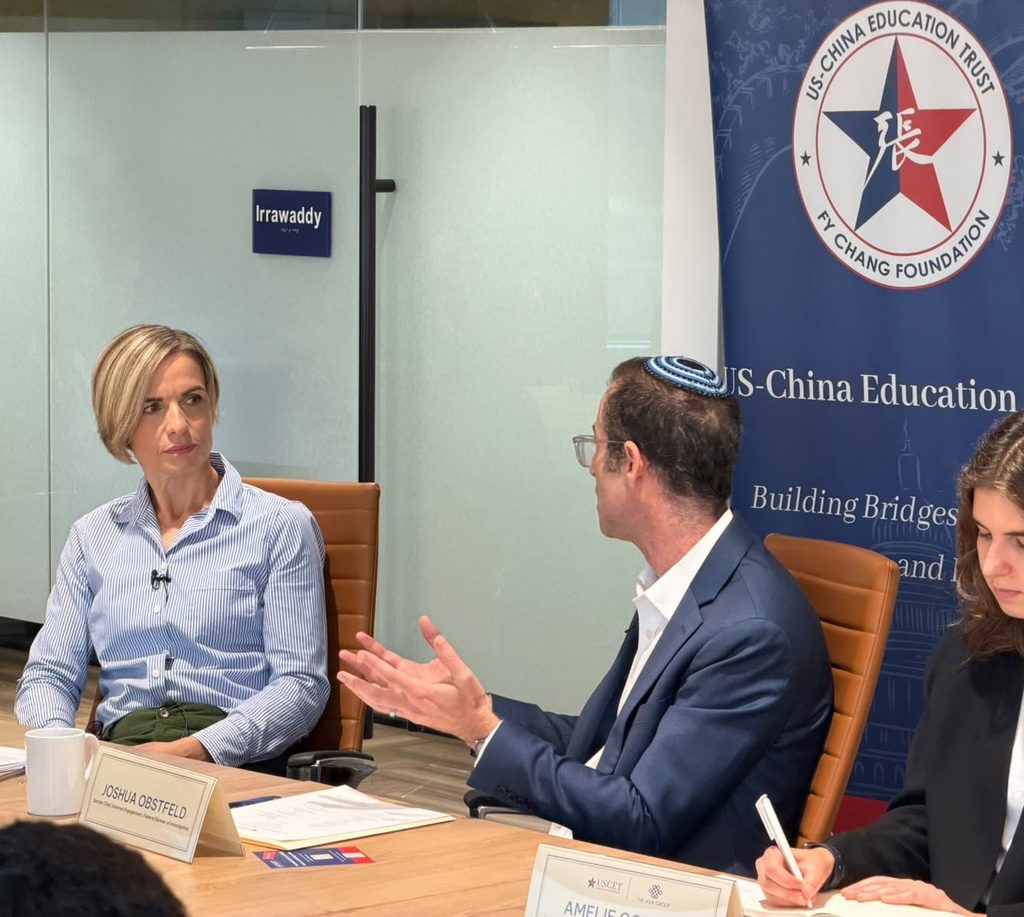
Obstfeld described three broad areas that may raise concerns during an adjudication. The first is whether there is evidence that an applicant has been recruited or cultivated by a foreign intelligence service. The second is whether the applicant has demonstrated the reliability and trustworthiness required to enter the government’s “circle of trust.” The third is whether outside relationships or circumstances could create leverage or pressure contrary to U.S. government interests.
His central practical message was that applicants should be candid about their travel, contacts, and experiences. Obstfeld said evaluators do not expect perfect memory, but applicants should make a good-faith effort to be straightforward about what they remember. He encouraged travelers to keep reasonable records of where they went, what they did, and whom they met. Traveling through a structured academic program can also provide useful institutional context and reference points for the clearance process.
The conversation also addressed security awareness during and after international travel. Obstfeld encouraged travelers to understand local laws and institutional expectations before departure, follow university travel-security procedures, and maintain regular check-ins with a designated contact at home. If someone approaches a traveler with a suspicious or covert request, he recommended reporting it through an appropriate university or law-enforcement channel.
“Definitely do keep records of where you’re going, and what you’re doing, and who you’re interacting with….you’re doing research anyway, you’re keeping notes…it should come naturally to you.” — Joshua Obstfeld
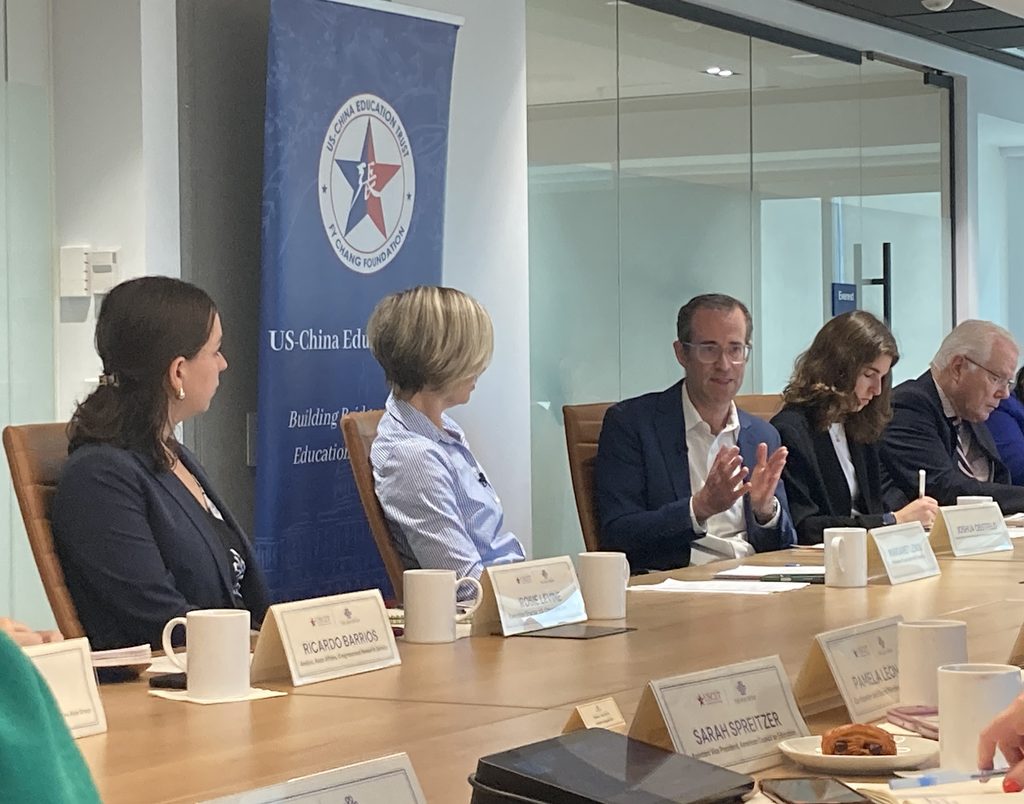
Similar risks can emerge online regardless of whether a person has traveled to China. Obstfeld highlighted virtual targeting through job websites and other online solicitation efforts. He noted that foreign-intelligence recruitment may begin with apparently benign professional contacts or positive incentives and develop gradually. Those who encounter suspicious outreach, he said, should use established reporting channels rather than trying to assess the situation alone.
Obstfeld also encouraged academics and university administrators to build relationships with the FBI before a crisis occurs. Local field offices have personnel responsible for external and community engagement, and he recommended establishing a baseline level of familiarity on “blue sky days,” when no immediate concern is present. He also encouraged people with China expertise and other relevant backgrounds to consider careers at the FBI, including agent and analyst roles.
Lewis then raised concerns about the lasting effects of the former Justice Department China Initiative on Chinese and Chinese American communities, particularly people with heritage ties, family connections, or China-related research. She asked how the FBI builds confidence that heritage or family ties do not drive investigative or clearance decisions. Obstfeld responded that the FBI uses a threat-centric approach that begins with evidence of bad actors and foreign-intelligence activity rather than ethnicity, national origin, or family ties. A person’s connection or proximity to a potential threat does not itself make that person a threat, he said. Although clearance applicants must provide extensive personal information and investigators may speak with people who know them, Obstfeld characterized these steps as standard components of the process and emphasized the importance of due process, strong evidentiary standards, and protecting Americans.
“There are millions of people who go to China every year, every month, and nothing happens right?…It is, I think, important to maybe dial down a little bit some of the anxiety.” — Joshua Obstfeld
As the conversation drew to a close, Obstfeld cautioned against overstating the dangers of travel to China, noting that many people travel there without incident. At the same time, he returned to virtual targeting as an area that requires sustained awareness. Looking ahead, he identified artificial intelligence—and a deeper understanding of the Chinese government’s approach to it—as an emerging issue for academics, policymakers, and law enforcement. Obstfeld concluded the event by thanking participants and encouraging conversations to continue in the future.
Related Resources
- Find broader China security information and clearance criteria at:
- Find further FBI Guidance at:
- Report suspicious activity at:
- 1-800-CALL-FBI
- tips.fbi.gov
Visit USCET’s Resource Hub for U.S. Academic Travel to China at this link: https://uscet.org/resource-hub/
Speaker Biographies
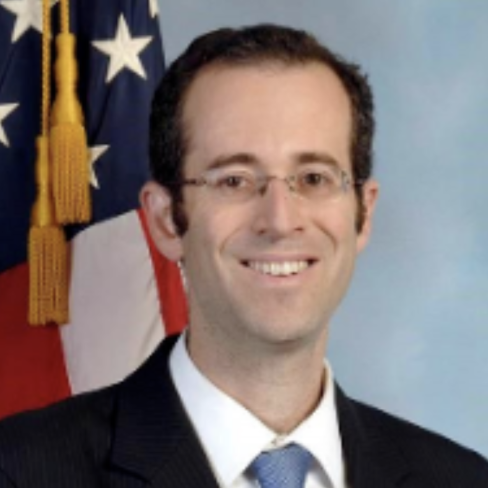
Joshua Obstfeld is the Senior Executive for External Engagement in the FBI’s Counterintelligence and Espionage Division. He joined the FBI in 2005 and currently focuses on congressional and executive branch engagement regarding strategic threats, FBI activities, and potential policy responses. Obstfeld previously served as Senior National Intelligence Officer for both China and Emerging and Disruptive Technologies. From 2021 to 2024, he led the Intelligence Branch of the FBI’s Newark Division, where he oversaw analysis of threats across New Jersey. He holds an M.A. in International Relations from the Johns Hopkins University School of Advanced International Studies and a B.A. from Johns Hopkins University.
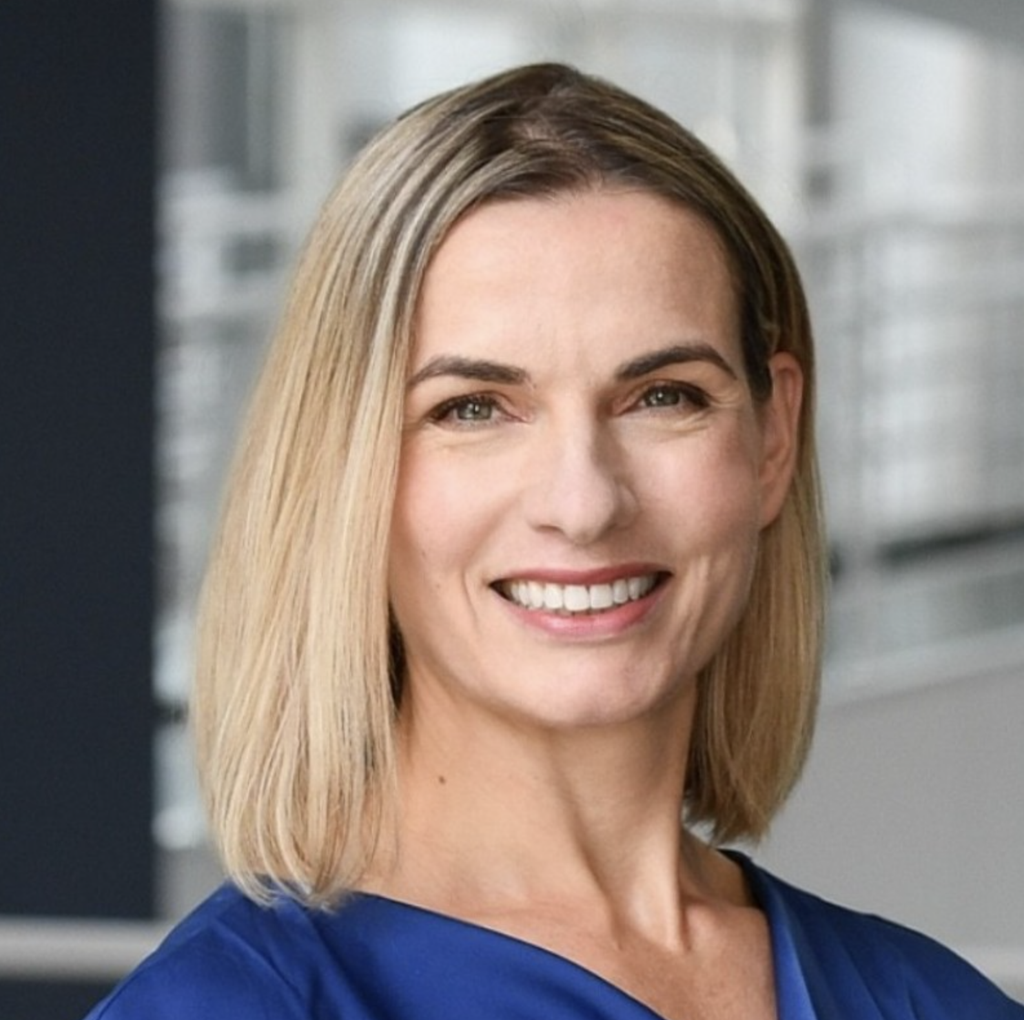
Margaret K. Lewis is a professor of law at Seton Hall University whose research focuses on China and Taiwan, with an emphasis on criminal justice, human rights, and legal issues in the U.S.–China relationship. She is a member of the Council on Foreign Relations and a board member and Public Intellectuals Program fellow with the National Committee on U.S.-China Relations. Lewis has served as a Fulbright Senior Scholar at National Taiwan University and as a visiting professor at Academia Sinica, and she has consulted for the Ford Foundation. In addition to publishing extensively on China and Taiwan, she co-authored Challenge to China: How Taiwan Abolished Its Version of Re-Education Through Labor with Jerome A. Cohen.