
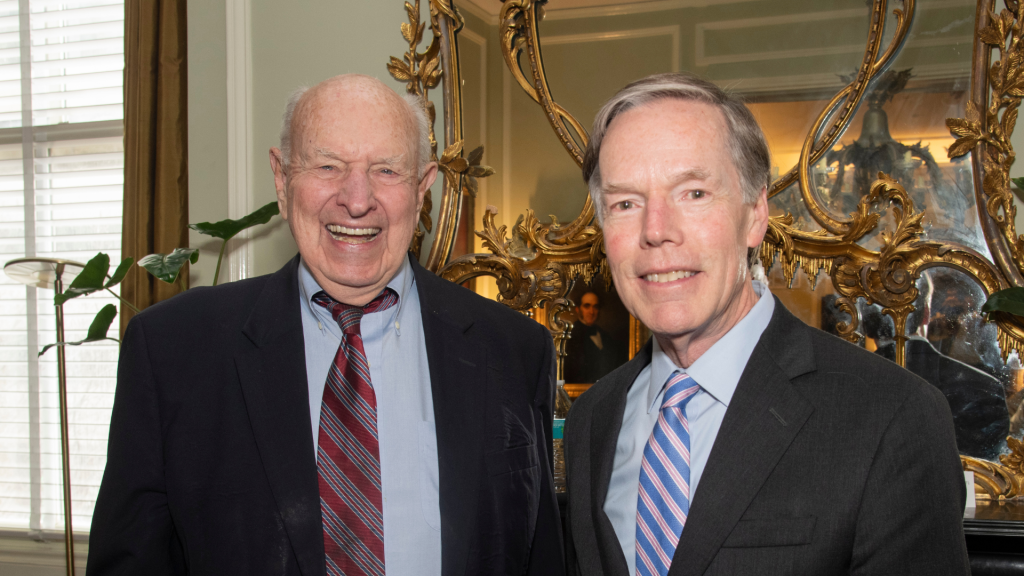
On March 6, 2026, USCET and the George Washington University’s Elliott School of International Affairs co hosted a C-SPAN live-streamed conversation with Ambassador Nicholas Burns as the inaugural event in USCET’s Distinguished Speaker Series and the March China Connections event. The audience included students, young professionals, academics, former officials, retired diplomats, and China watchers from across the policy community.
The event opened with remarks from Dr. Benjamin Hopkins, senior associate dean of the Elliott School, who welcomed guests on behalf of the School and highlighted its long standing partnership with USCET. Ambassador Julia Chang Bloch, executive chair of USCET, then welcomed the audience and marked the launch of the Distinguished Speaker Series, inaugurated with two diplomats she described as among the most distinguished in modern American history.
“As strategic competition with China reshapes the international system, the steady craft of diplomacy grows ever more indispensable.” – Ambassador Julia Chang Bloch
Ambassador Thomas R. Pickering delivered opening remarks, framing the U.S.–China relationship as one containing under-explored opportunities. Organizing his remarks around areas of potential cooperation, Pickering argued that China’s engagement is indispensable on several of today’s most pressing issues. On Ukraine, he called for China to take a more active peacemaking role and outlined a phased settlement framework: international peacekeepers, a five-year timeline for Russian withdrawal from occupied territories, and UN supervised referenda, with Crimea handled separately.
“I have become tired of our political leaders telling us about all of the tragic foibles of China in its opposition to the United States because it represents the conclusion of a dead end street.” – Ambassador Thomas Pickering
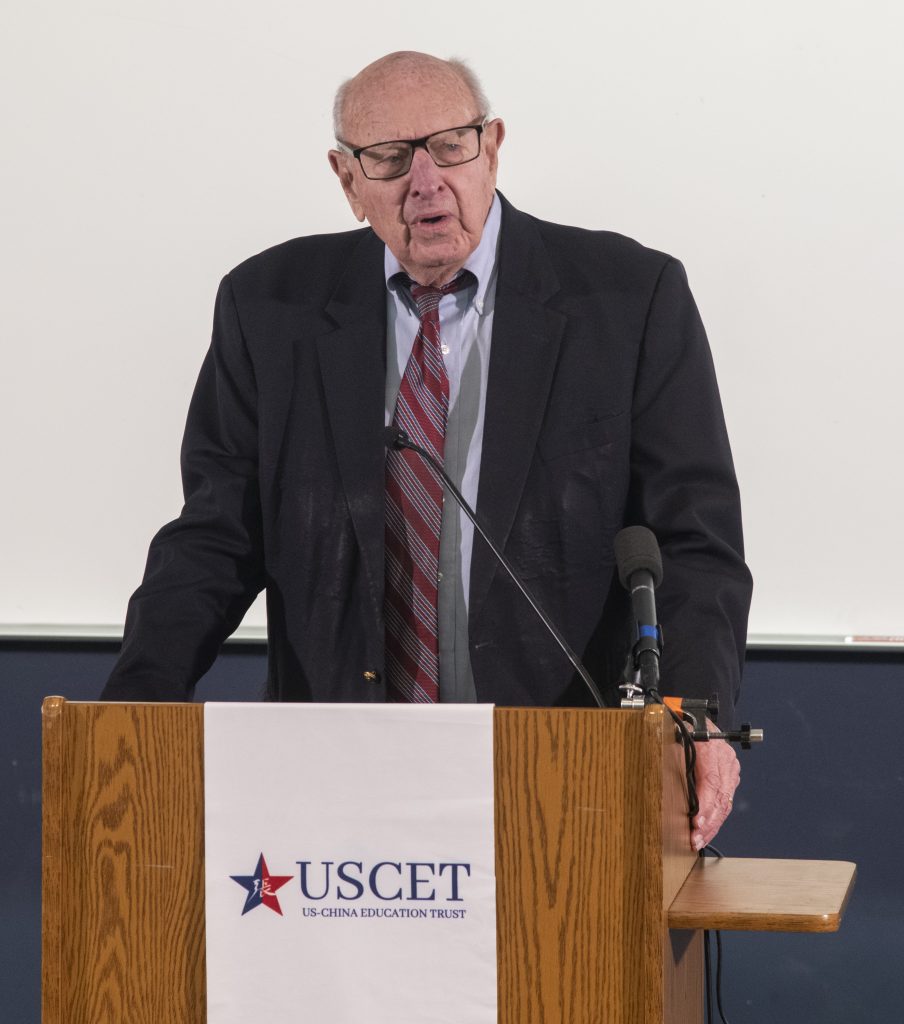
On nuclear nonproliferation, he advocated bringing China into arms control negotiations, noting that Beijing is expanding its arsenal from roughly 600 to 1,000 warheads. On trade, he questioned the current tariff strategy, arguing that the costs fall largely on American consumers rather than foreign governments. On Taiwan, he proposed structured and confidential dialogue between Taipei and Beijing as a starting point for identifying shared interests. None of this would be easy, he acknowledged, but narrow channels of cooperation are preferable to confrontation without strategy.
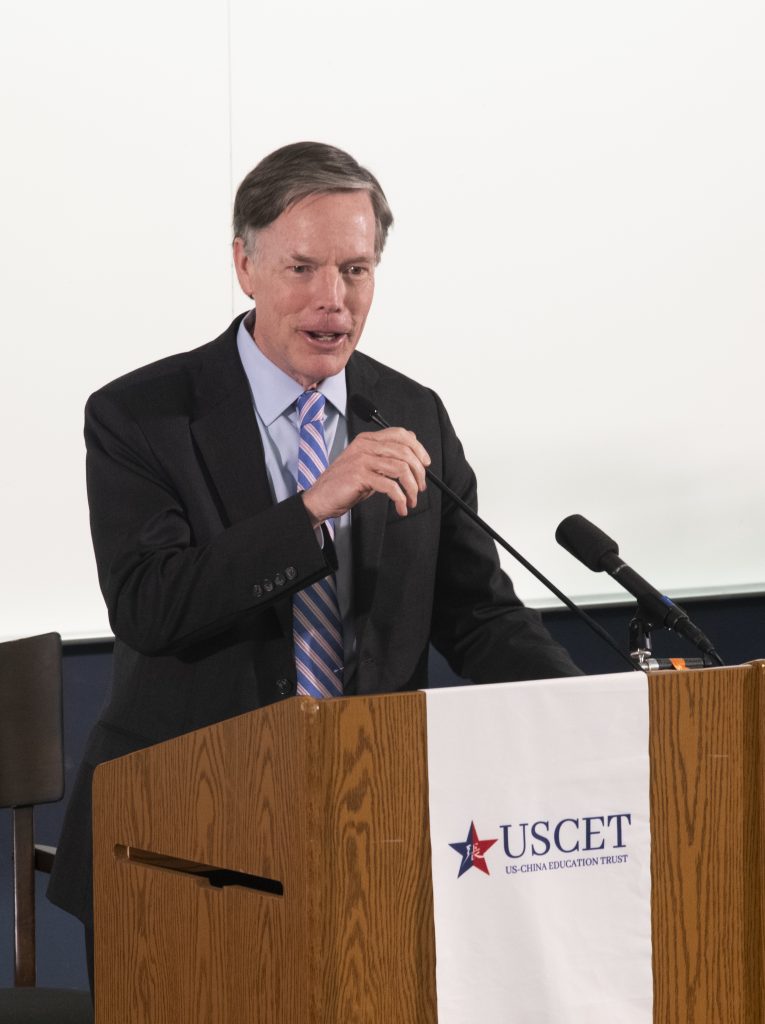
Ambassador Burns began his remarks by acknowledging several China experts in attendance. He expressed particular admiration for Ambassador Pickering, whom he described as the gold standard for his generation of Foreign Service Officers. Pickering’s career, he noted, is unmatched in the 102 year history of the U.S. Foreign Service in both the number of ambassadorships and the quality of the work. Ambassador Burns also warmly recognized Ambassador Julia Chang Bloch and several distinguished China specialists in the room, including Kenneth Lieberthal, David M. Lampton, David Shambaugh, Ambassador Craig Allen, and David Meale.
“Look at the negotiations in just the past couple of weeks [with Ukraine and Russia, with the Gaza ceasefire, with Iran]. The Foreign Service was not present at any of those. Not just not in the pictures — not in the room. That has never happened before in 102 years.” – Ambassador Nicholas Burns
On military competition, Ambassador Burns stressed China’s ambition to become the dominant military power in the Indo-Pacific, arguing that the United States cannot allow that outcome. Maintaining alliances with Japan, South Korea, the Philippines, and Australia, along with strengthening security partnerships with India and others, is essential to that effort.
Turning to the substance of the relationship, Ambassador Burns described the central challenge as how the United States can compete with China across military, economic, and technological domains while maintaining the guardrails needed to prevent miscalculation from escalating into conflict.
On technology, Ambassador Burns called it “the coin of the realm,” particularly in 2026. Competition in artificial intelligence, quantum computing, synthetic biology, cyber capabilities, and space-based technologies will shape not only the global economy but also the distribution of power within it.
He also warned about the consequences of cutting federal support for scientific research. In conjunction with the defunding of USAID, Ambassador Burns argued that reducing federal funding for basic research at universities such as Harvard, MIT, and Caltech weakens the chain linking government investment to private sector innovation, a system that has driven American economic leadership since the Manhattan Project.
On trade, Ambassador Burns expressed hope that President Trump’s upcoming visit to Beijing might produce a tariff truce, restore supply chain predictability, and revive agricultural purchases. He endorsed the “small yard, high fence” approach, advocating strict controls on Chinese access to sensitive technologies while preserving broader commercial exchange. At the same time, Ambassador Burns cautioned against full economic decoupling, warning that it would impose substantial costs on the U.S. economy without delivering clear strategic benefits.
Ambassador Burns also identified areas where cooperation remains both possible and necessary, including climate change, fentanyl, global health, and the broader goal of sustaining peace. People to people exchange, he argued, is a particularly durable foundation for stability in the relationship. He called on universities, exchange programs, and organizations like USCET to help rebuild these connections.
“But we’re not enemies with China and, Julia, to reflect on your work through the U.S.-China Education Trust, we want to narrow the differences.” – Ambassador Nicholas Burns
Ambassador Burns closed with a story from a 2024 visit to a university in Guizhou, a campus of roughly 40,000 students. There, he discovered that only one American student was enrolled, a 19-year-old from Sacramento named Jared Shelly. Jared was living in a dorm with six Chinese roommates and had been speaking Mandarin daily after months without hearing another English speaker. When Ambassador Burns asked how he ended up there, Jared explained that a Chinese immigrant girlfriend from his Sacramento high school had once convinced him that China was the center of the world. By the time Ambassador Burns visited the campus, the relationship had long since ended, but Jared had stayed. Ambassador Burns cited the story as an example of the curiosity and commitment that the United States needs.
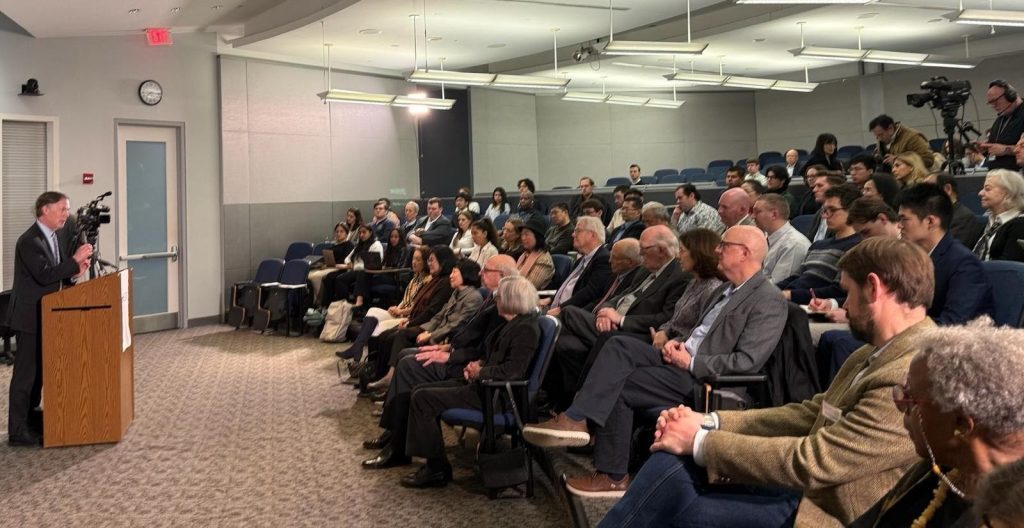
The event concluded with audience questions. Two students enrolled in programs at the Hopkins Nanjing Center asked about career prospects at a time when government pathways in China related fields have narrowed. Ambassador Burns pointed to opportunities in the private sector, particularly in technology and finance, and suggested pursuing advanced academic training while helping rebuild China expertise across institutions such as the State Department, Pentagon, and intelligence community.
Responding to a question about human rights, Ambassador Burns argued that silence is not an option for the United States. Another student asked whether the Olympics could serve as a diplomatic bridge. Ambassador Burns reflected on the complexities of sports diplomacy while emphasizing that people to people engagement remains essential to managing the relationship over the long term.
Following the public event, USCET hosted a fireside chat between Ambassador Burns and Ambassador Pickering at the DACOR Bacon House. The conversation focused on the more difficult strategic questions shaping the current moment.
Participants discussed the state of U.S. credibility abroad, with Ambassador Burns noting that many allies and partners are increasingly uncertain about whether the United States remains a reliable anchor of the international order. If these trends persist, he warned, the next American administration will face a far heavier task in rebuilding trust and restoring coherence to U.S. foreign policy.
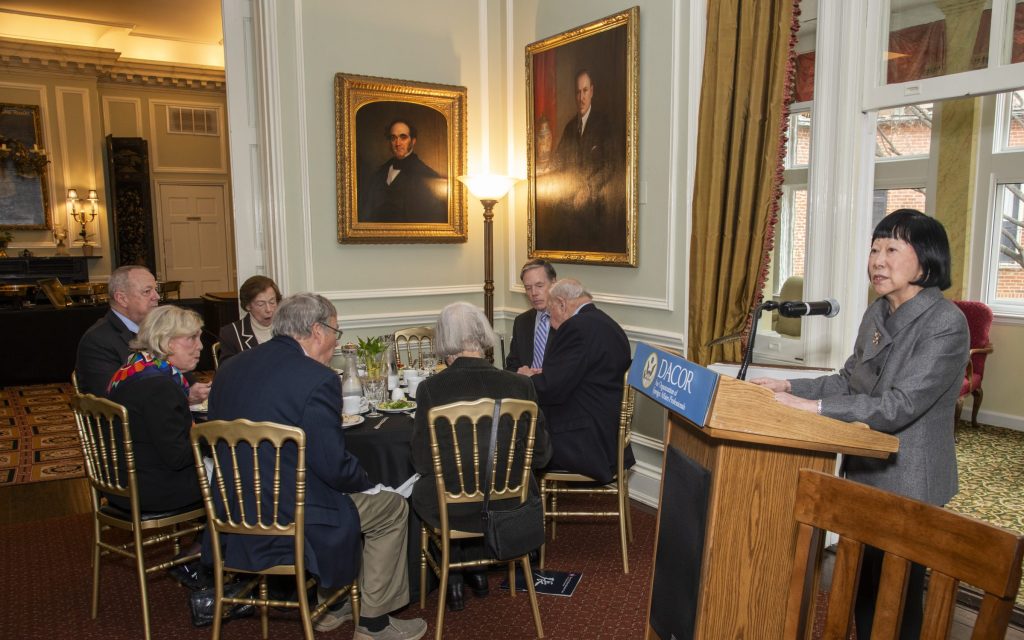
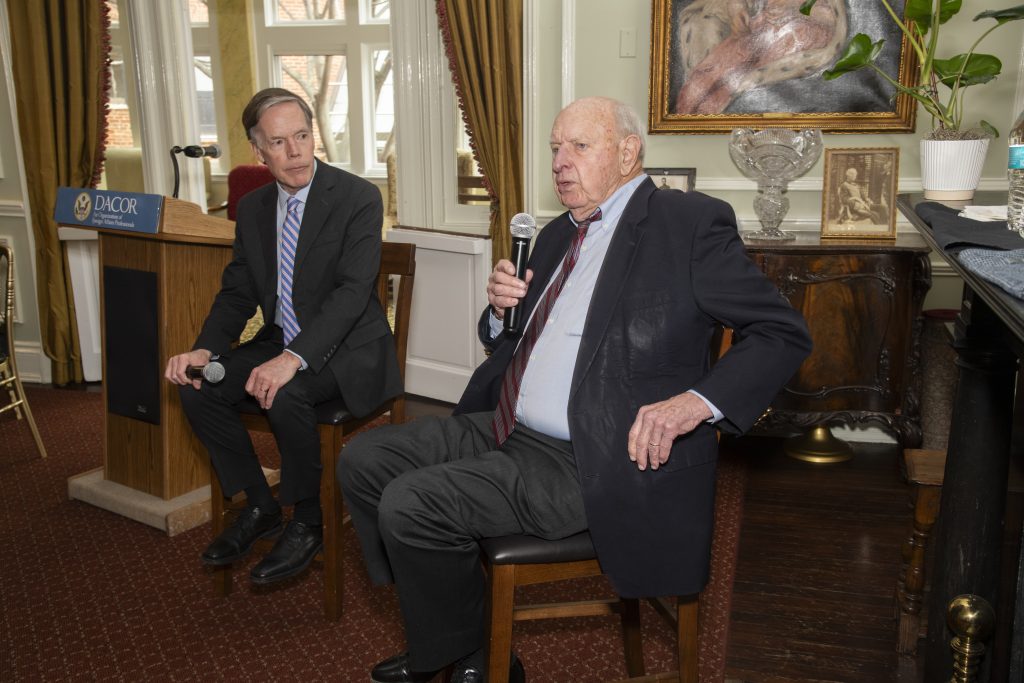
The session concluded with a reflection on the role of American diplomacy. Ambassador Burns called for renewed investment in the professional Foreign Service and in deep China expertise across government, intelligence agencies, and the military. The sidelining of experienced professionals at a moment when their knowledge is most needed carries strategic costs that accumulate slowly but are difficult to reverse. The United States, he argued, is most effective not as a unilateral actor but as a coalition builder that consults allies and embeds its interests within a broader collective effort.
Speaker Biographies
Speaker
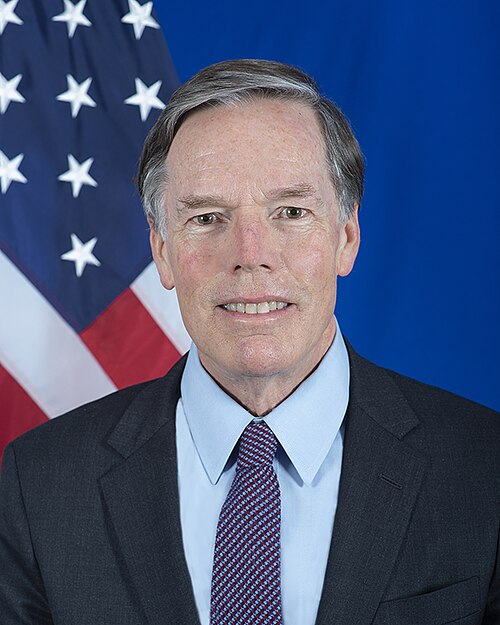
Ambassador Nicholas Burns is the Roy and Barbara Goodman Family Professor of the Practice of Diplomacy and International Relations at Harvard University’s Kennedy School of Government. He is the Founder and Faculty Chair of the Future of Diplomacy Project. He is also a Faculty Affiliate at Harvard’s Fairbank Center for Chinese Studies.
Burns served as the U.S. Ambassador to the People’s Republic of China from 2022-2025, leading public servants from 48 U.S. government agencies at the U.S. mission to China in overseeing one of America’s most important and challenging bilateral relationships. During his tenure, he helped to stabilize relations with Beijing while competing with China on military, technology, economic, and human rights issues.
Burns holds numerous awards and honorary degrees, including the Presidential Distinguished Service Award and the Secretary of State’s Distinguished Service Award.
Opening Remarks
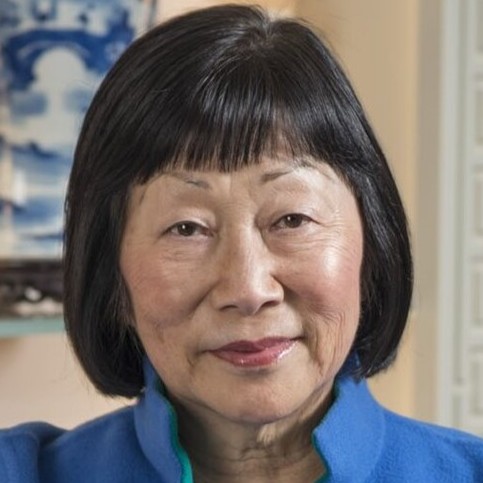
Ambassador Julia Chang Bloch is the first Asian American to serve as a U.S. Ambassador and the first Asian American Peace Corps Volunteer. She began her distinguished career in 1964 as a Volunteer in Malaysia and rose to become U.S. Ambassador to Nepal in 1989. Her public service included presidential appointments at the U.S. Agency for International Development, leadership roles in the U.S. Senate and U.S. Information Agency, and fellowships at Harvard University. She is recognized among 147 notable women in U.S. history in A to Z of American Women Leaders and Activists.
After 25 years in government, Ambassador Bloch entered the private sector in 1993 as Group Executive Vice President at Bank of America, where she led Public Relations, Government Affairs, and Public Policy. She later served as President and CEO of the United States-Japan Foundation and, beginning in 1998, shifted her focus to China as a visiting professor and academic leader at institutions including Peking University, Fudan University, and the University of Maryland. She is the Founding President and Executive Chair of the U.S.-China Education Trust (USCET) and co-founder of both the Organization of Chinese American Women and the Women’s Foreign Policy Group.
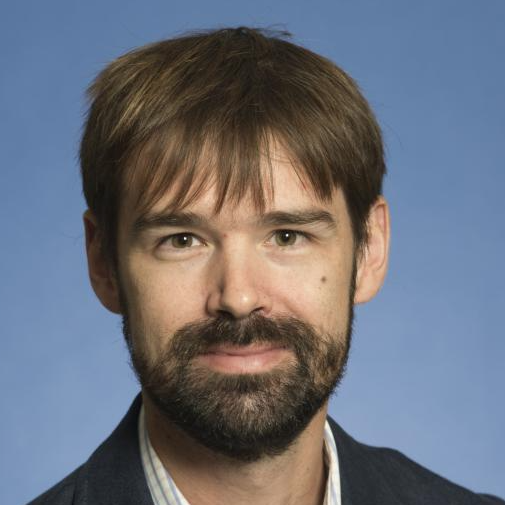
Dr. Benjamin D. Hopkins is Senior Associate Dean of Academic Affairs at the Elliott School of International Affairs at George Washington University, overseeing the school’s academic programs, graduate admissions, international exchanges, and student services. A historian of modern South Asia, he specializes in the history of Afghanistan and British imperialism on the Indian subcontinent. His book Ruling the Savage Periphery: Frontier Governance and the Making of the Modern State won the Association of Asian Studies Ananda Kentish Coomaraswamy Prize in 2022.During the 2021–22 academic year, he served in the State Department’s Bureau of Conflict Stabilization Operations. He previously directed the Sigur Center for Asian Studies and has held fellowships from the Council on Foreign Relations and the Woodrow Wilson Center.
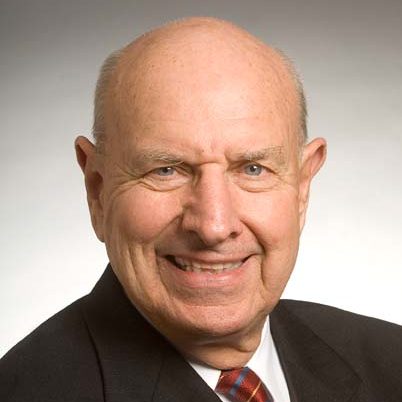
Ambassador Thomas R. Pickering is Vice Chairman of Hills & Company and a veteran American diplomat who serves on the USCET Advisory Council. He served as Under Secretary of State for Political Affairs (1997–2000) and as U.S. Ambassador to the Russian Federation, India, Israel, El Salvador, Nigeria, and Jordan. He also served as U.S. Ambassador and Representative to the United Nations in New York, where he led U.S. coalition-building efforts in the UN Security Council during and after the first Gulf War.
Pickering held additional senior posts in Tanzania, Geneva, and Washington, including serving as Special Assistant to Secretaries of State William P. Rogers and Henry A. Kissinger. After retiring from the State Department in 2000, he joined The Boeing Company as Senior Vice President for International Relations and a member of the Executive Council. He holds degrees from Bowdoin College, the Fletcher School of Law and Diplomacy, and the University of Melbourne, and speaks multiple languages including French, Spanish, and Swahili.
China Connections
Why should Americans be interested in China? USCET launches China Connections, a new monthly series hosting discussions with experts to explore their work, gain insights into current events, and learn what a career in the China field looks like today. These events highlight individuals with unique expertise on China to provide students, young professionals, and members of the public a deeper understanding of current events and increase American student interest in pursuing a focus on China. These events are mostly held in person at George Washington University with online engagement.