
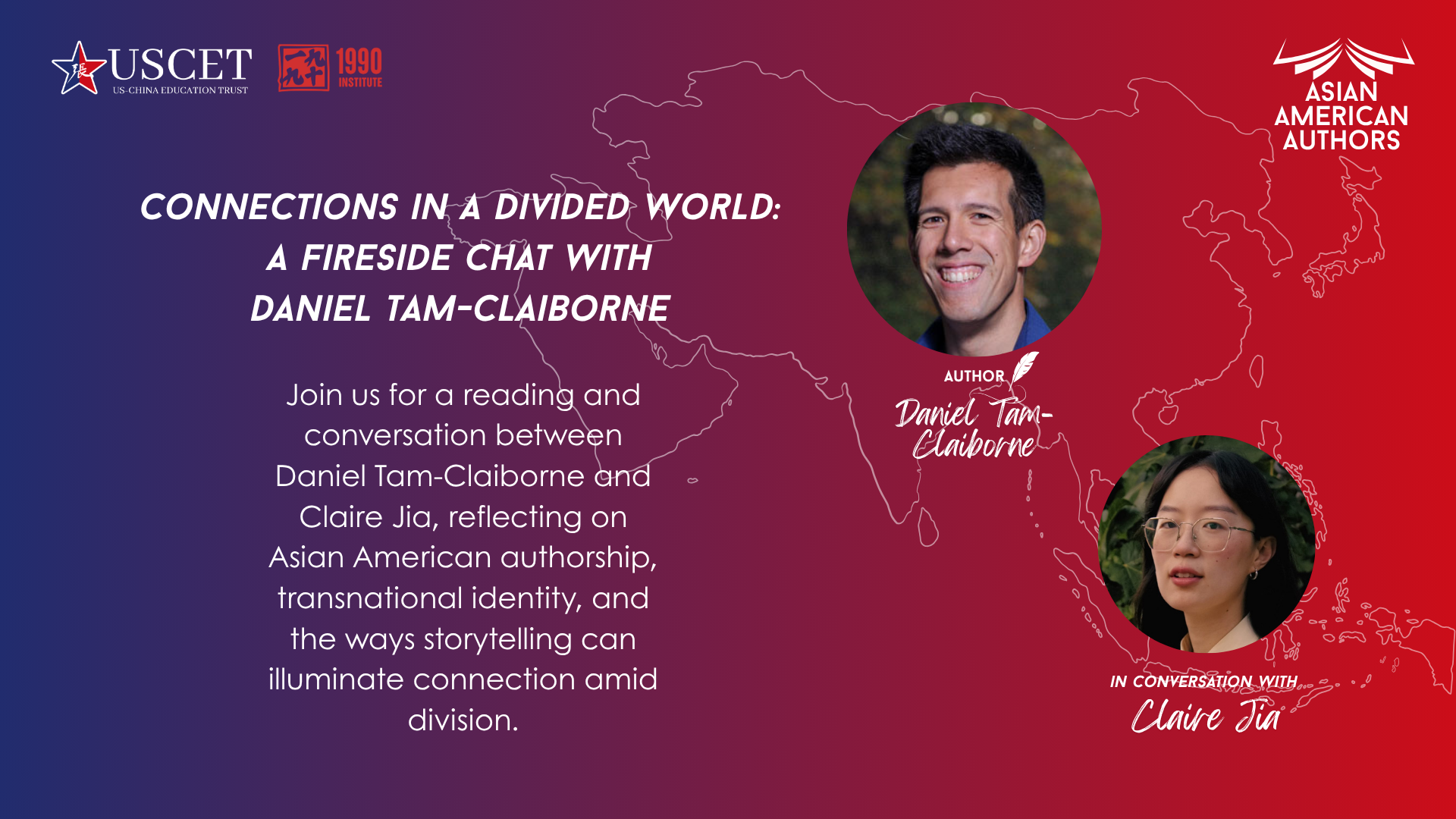
On March 18, USCET and the 1990 Institute hosted the latest virtual installment of the Asian American Author Series, featuring Daniel Tam-Claiborne — in conversation with award-winning author Claire Jia —on his debut novel Transplants. The discussion brought together participants for a thoughtful exploration of identity, cross-cultural experience, and human dimensions of U.S.–China relations in the creative space.
USCET Executive Director Rosie Levine opened the event by highlighting the organization’s mission and emphasizing the importance of artistic narratives in shaping and deepening mutual understanding between societies at a time of growing geopolitical tension.
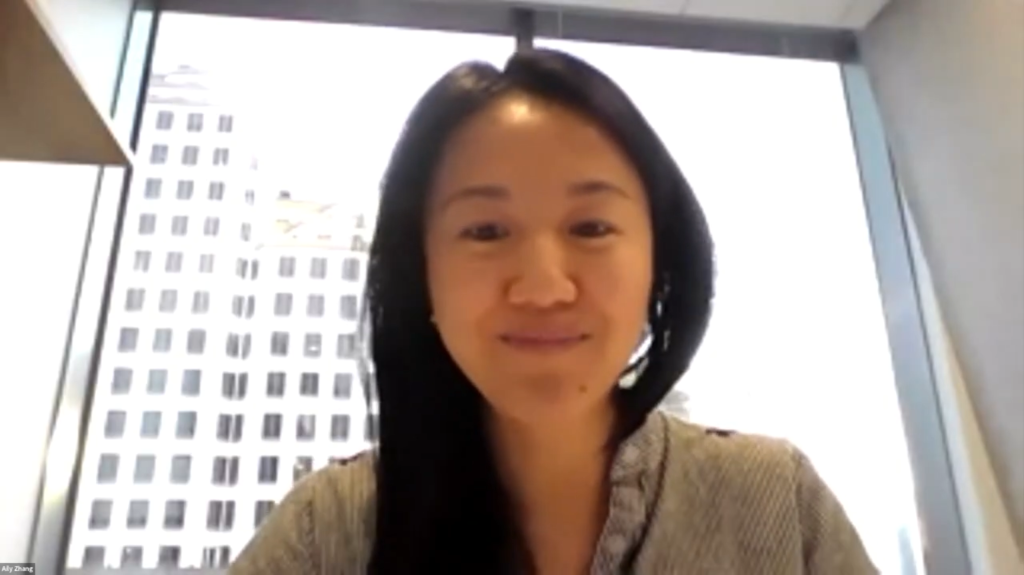
Aily Zhang, programs committee co-chair of the 1990 Institute, shared her remarks on the importance of literature in bringing nuance and empathy to conversations that are often dominated by geopolitics and national security. Zhang affirmed how storytelling offers a critical lens into identity fluidity across borders and helps audiences engage with individual lived experiences amid the waxing and waning of U.S.–China relations.
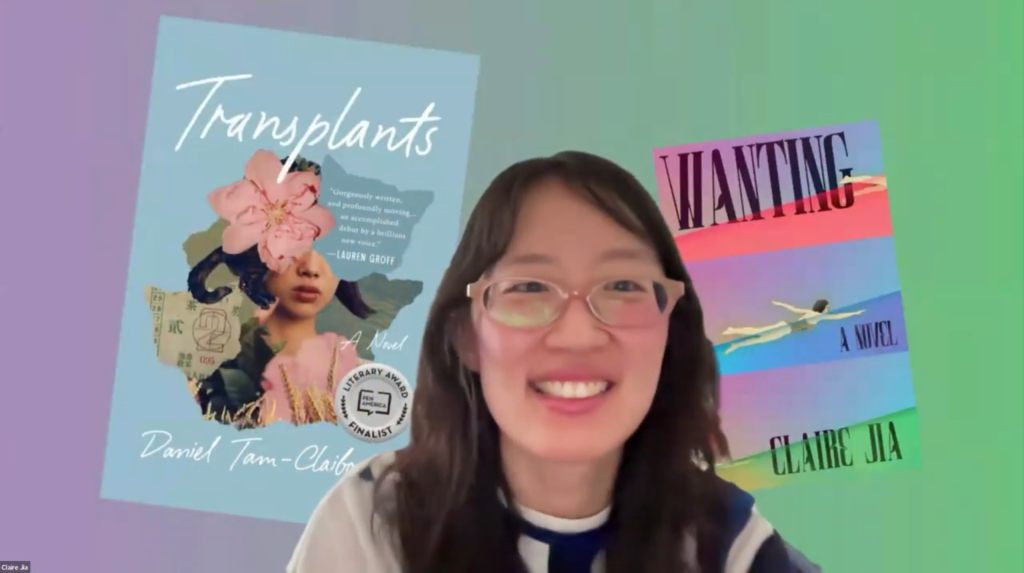
Claire Jia, a rising Chinese American author whose debut novel Wanting was named a Best Book of 2025 by NPR, Public Books, and the Chicago Sun-Times, moderated the discussion with warmth and literary curiosity. The two authors first met at the Association of Writers and Writing Programs conference in Los Angeles, where they found an immediate connection in their shared themes. That prior relationship brought a collegial intimacy to the conversation that made space for candid reflection on craft, identity, and storytelling across cultural bounds.
In conversation, the two authors explored Tam-Claiborne’s creative journey: the personal experiences and current events that shaped Transplants, the craft decisions that created its voice, and the broader questions of responsibility and empathy that make narratives like Transplants essential in this moment in U.S.-China relations.
Identity and the making of the novel
Tam-Claiborne and Jia shared their thoughts on the experience of finding one’s identity while navigating multiple cultural identities, including how that experience influenced Tam-Claiborne’s writing. Transplants reflects the realities of individuals who move between the United States, China, and Taiwan. Such transnational experiences often result in grappling with questions of home, language, and self-discovery. Both authors highlighted how these experiences resonate with broader diasporic communities, particularly Asian Americans, whose identities are often shaped by both domestic and international contexts.
Tam-Claiborne traced his novel’s origins to his arrival in rural Shanxi, China in 2009 on a university program, where he expected to find clarity through proximity to his Chinese heritage. As someone with a Chinese mother and Jewish father, he had grown up navigating two communities without feeling fully immersed in either:
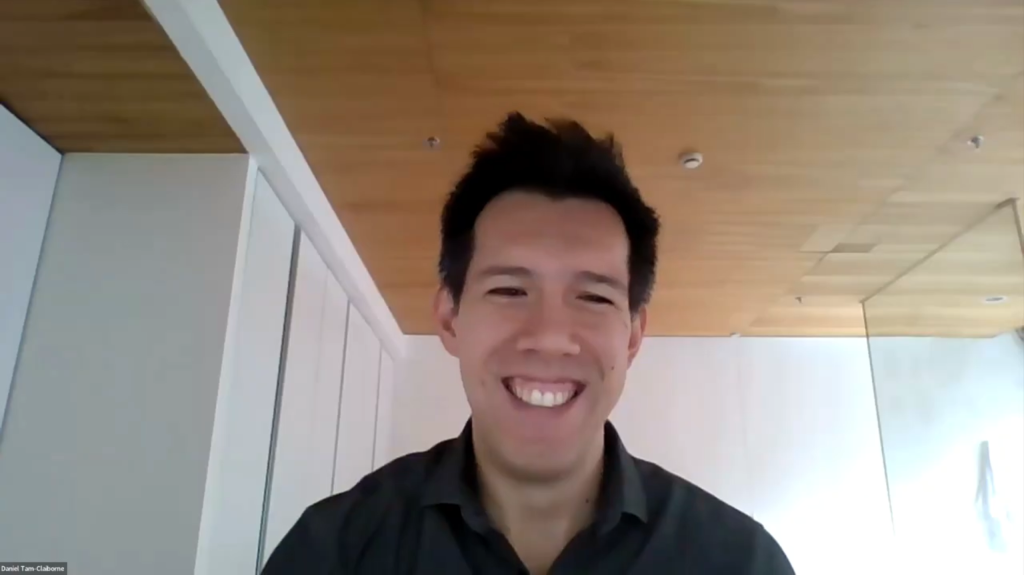
“There was this unease of being caught between these worlds – the very classic paradigm of not being Chinese enough for China, not being American enough for America.” – Daniel Tam-Claiborne
However, what he found in Shanxi was not resolution but a deeper disorientation. He was treated there only as a foreigner. Tam-Claiborne’s questions multiplied rather than being answered. Writing then became a conduit, a vehicle for making sense of experiences and unresolved desires.
Craft and the cross-cultural imagination
The conversation also explored the literary choices that give Transplants its distinctive texture. Tam-Claiborne discussed his decision, against the advice of his editors, to weave Mandarin into the novel’s dialogue without translation or italics. He framed it as a conscious departure from earlier generations of Asian American writers like Amy Tan and Maxine Hong Kingston, who chose to italicize foreign sayings and add explanatory footnotes. Tam-Claiborne argued that while that work was essential and beautiful, it reflected a moment in history in which Asian American experiences had to be cited to be legible to the Western gaze. He wanted to, instead, trust readers to sit with moments of partial understanding rather than having everything explained.
That decision extended to the novel’s broader approach to cultural specificity. Rather than smoothing over the friction of living between languages, Tam-Claiborne wanted readers to intimately feel the words left unsaid, the sayings that don’t translate, and the constant negotiation needed to navigate both worlds at once. It was, to him, the most honest way to render what the outsider experience actually feels like.
For Jia, reading the novel as a Mandarin speaker, those embedded passages felt like a delightful act of recognition:
“It felt like kind of a secret that we were exchanging.” – Claire Jia
Writing through the pandemic
The novel’s timeline includes the COVID-19 pandemic as a historical backdrop–not by original design, but because the story demanded it. Tam-Claiborne had begun writing in 2019 with a lockdown scenario already in mind, drawn from his previous experience at the time of the 2009 swine flu outbreak and subsequent lockdown in China. When the COVID-19 pandemic arrived, writing was still in progress, and what had been an idiosyncratic detail suddenly became overwhelmingly universal. In response, he pulled the narrative forward in time to meet the moment.
By contrast, Jia noted she made the opposite call in her new novel, Wanting, to avoid the pandemic. She cited feeling like she didn’t have the tools given she herself hadn’t reconciled her feelings with the pandemic and its consequences yet. Jia’s decision thus made Tam-Claiborne’s willingness to write through the uncertainty.
“It is both fascinating and also terrifying to be trying to write a narrative through a time where we ourselves had no idea if or when we would ever come out of this.” – Daniel Tam-Claiborne.
Their contrasting approaches underscore a question every writer faces when history intervenes: whether to document the moment as it unfolds, or to wait until there is enough distance to understand what it meant. For Tam-Claiborne, writing through that uncertainty only deepened his conviction that literature has a unique responsibility to bear witness to the human cost of the forces that shape our world.
Literature as a bridge in a time of tension
Drawing on his teaching experience during his Fulbright Taiwan program, Tam-Claiborne reflected on the responsibility he felt to locals in their exposure to the Western world through him. He spoke about former students whose life trajectories were dramatically altered by their exposure to foreign teachers and the English language and sat with the question of what that means for those who set those changes in motion. Jia captured why that question gives the novel its emotional force:
“What responsibility do we have to the people that we influence? It’s a heartbreaking thing that happens.” – Claire Jia
Tam-Claiborne and thousands of foreign teachers like him are often pivotal to shaping their students’ worldviews while never crossing paths with them again. The heartbreak of the physically fleeting yet emotionally lasting nature of these transnational connections is captured in Liz and Lin’s brief encounter with each other that sets up their respective harrowing emotional journeys.
Yet for all its specificity to the U.S.-China experience, the novel’s emotional core proved quite universal. When asked how readers have responded, Tam-Claiborne remarked that many readers saw themselves in both Lin and Liz, and non-Chinese American readers were among those who found the story unexpectedly resonant.
At a time when people-to-people contact between the U.S. and China is declining rapidly from cancelled exchange programs to visa troubles, the need for empathy becomes increasingly urgent. Literature, Tam-Claiborne suggested, remains one of the few vehicles for cultivating empathy that exchange programs once made possible.
The discussion reinforced USCET’s broader mission of promoting dialogue through education and cultural exchange, particularly by amplifying voices that reflect diverse and complex experiences.
Looking ahead – Q&A
The event concluded with a Q&A session with the audience members, who asked for advice for aspiring Asian American writers who don’t want to be pigeon-holed into that identity, witty insights on “China-maxing,” and what plans they have going forward.
On advice for Asian American writers, both authors offered thoughtful perspectives. Tam-Claiborne described himself as someone who actually always wanted to be claimed by the Asian American literary community and gently noted that the label need not be permanent or limiting. Jia encouraged the questioner to reflect on why they resist that label, and then to write toward the stories they genuinely want to tell.
On the “China-maxing” trend in western social media like TikTok or Instagram, Jia admitted her own apprehension about this humorous depiction of Chinese culture online not painting the full picture but appreciated that it adds diverse perspectives to the mix. Against the backdrop of increased geopolitical tension between the U.S. and China and years of American public distrust toward China, this light-hearted boost of Chinese culture online is overall a welcome change.
On the question of what comes next, Tam-Claiborne shared that he is at work on a new novel that continues to explore identity, complicity, and belonging, but through a different lens. He did not offer further details.
To conclude, Tam-Claiborne and Jia repeatedly emphasized the continued importance of people-to-people ties in shaping the future of U.S.–China relations. As geopolitical tensions persist, initiatives like USCET’s Asian American Author Series play a vital role in sustaining dialogue and highlighting the human stories that underpin international relationships.
Speaker Biographies
Speaker
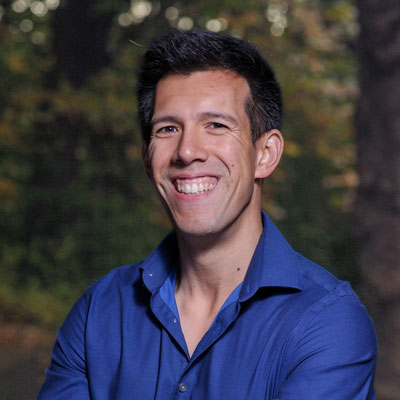
Daniel Tam-Claiborne is a multiracial writer, multimedia producer, and nonprofit director. Prior to Transplants, he authored the short story collection What Never Leaves, and his writing has appeared in Michigan Quarterly Review, HuffPost, Catapult, and elsewhere. A 2022 National Endowment for the Arts Literature Fellow, he has also received fellowships and residencies from the U.S. Fulbright Program, Poets & Writers, and more. He serves on the Board of Directors of Seattle City of Literature.
Tam-Claiborne is also an award-winning producer for WNET, America’s flagship PBS station. He has curated community programs, screenings, and other events in partnership with cultural spaces, universities, arts nonprofits, and advocacy organizations across the country. Tam-Claiborne holds degrees from Oberlin College, Yale University, and the MFA Program for Writers at Warren Wilson College.
Moderator
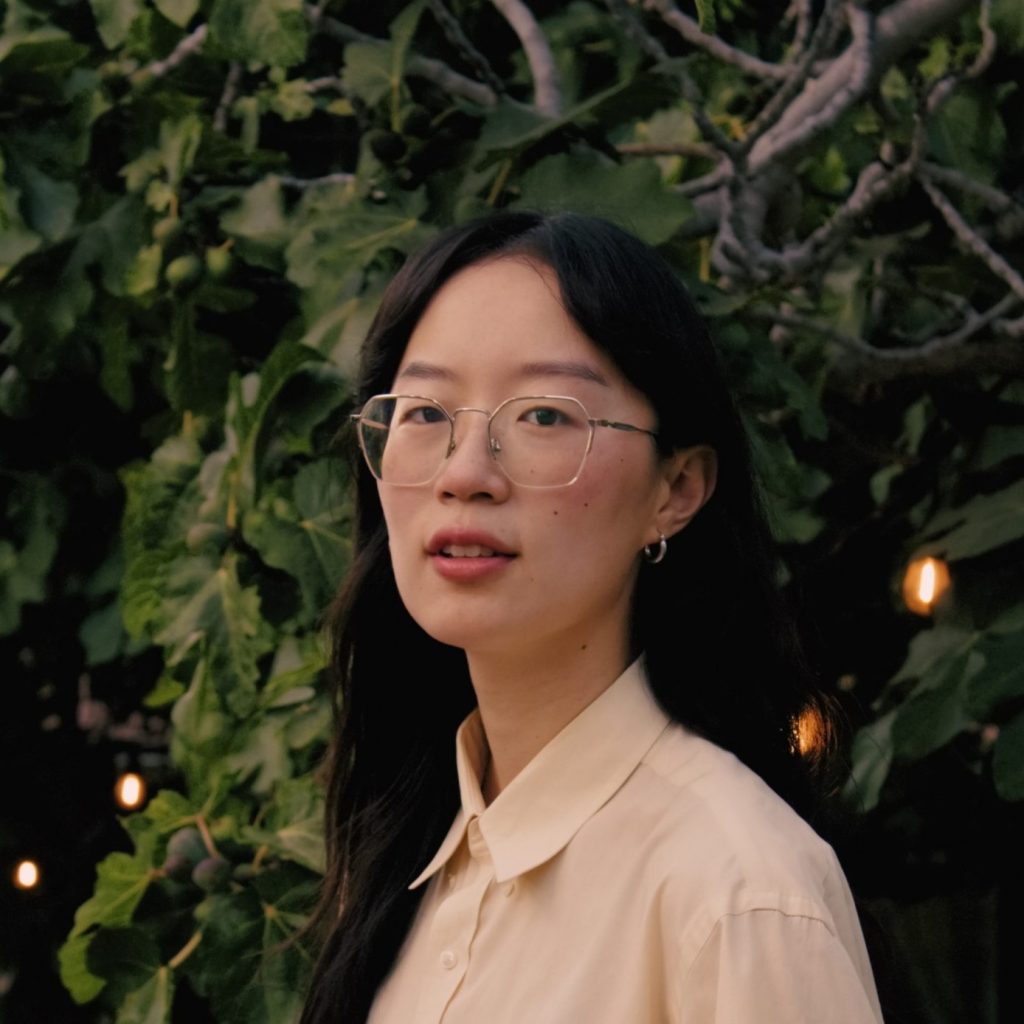
Claire Jia’s debut novel, Wanting (Tin House), was an NPR, Elle, Public Books, and Chicago Sun-Times Best Book of 2025. Her work has appeared in The New York Times Modern Love column, The Rumpus, Reductress, and more. She writes for television and co-wrote the Peabody Award-winning video game We Are OFK. Other credits include Zombies: The Reanimated Series, Awkwafina is Nora from Queens, and Fresh Off the Boat. Her family is from Beijing, and nothing puts her at peace like haggling in a chaotic Beijing marketplace. She hails from the Chicago suburbs, but today she lives in Los Angeles.
ASIAN AMERICAN AUTHOR SERIES
USCET’s Asian American Authors Series brings outstanding Asian American authors to Chinese audiences to introduce their literary works and discuss their experiences with American multiculturalism. This series was launched in November 2012 with award-winning Chinese American Author Gish Jen at Beijing Foreign Studies University. Following the successful launch, USCET brought a number of other acclaimed Asian American authors to China including Shawn Wong (2013), Helen Zia (2017), Cheryl Tan (2018), Karen Yamashita (2018), and Shirley Lim (2018).