
On the evening of April 7, USCET, GW’s Sigur Center, and Young China Watchers co-hosted the 2026 China Town Hall in partnership with the National Committee on US-China Relations. The evening included joining a nationwide live webcast connecting thousands of participants across 77 partner venues with some of America’s foremost China experts, followed by an in-person fireside chat and Q&A.
National broadcast: Dialogue with Stephen Biegun and Sarah Beran
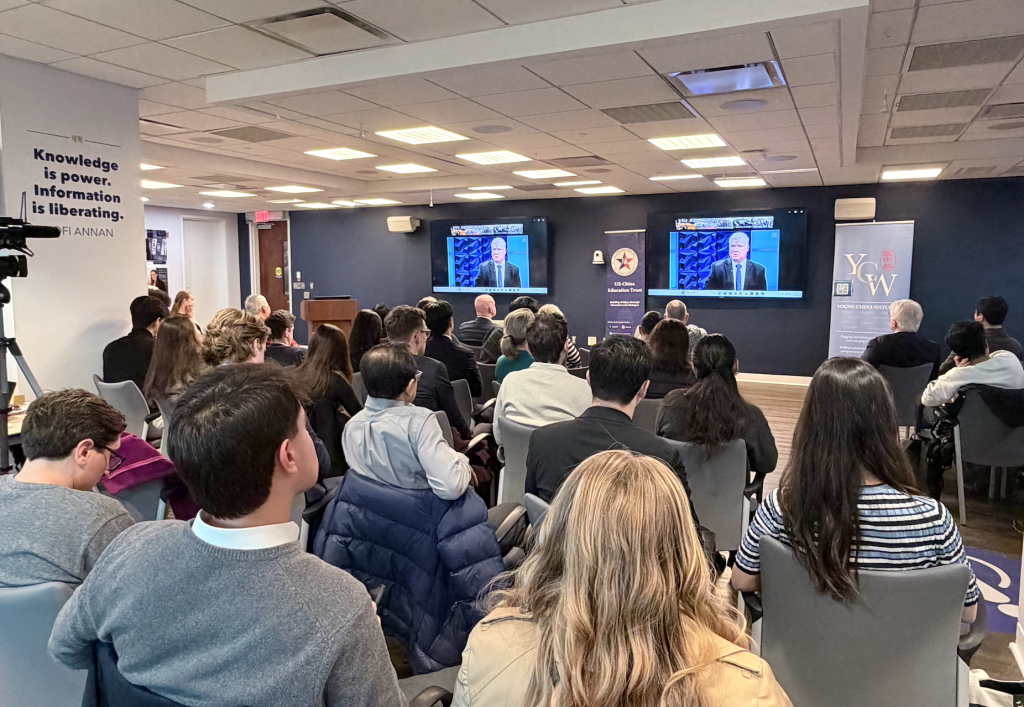
National Committee President Stephen Orlins moderated a conversation with Stephen Biegun, former deputy secretary of state in the first Trump administration, and Sarah Beran, former deputy chief of mission at the U.S. Embassy in Beijing and partner at Macro Advisory Partners.
The conversation opened with discussion of the Iran war. Beran assessed that while Beijing has not welcomed the conflict — its disruption of energy markets and trade flows runs counter to Chinese interests — China has nonetheless prepared better than almost any other country for the fallout. Biegun added that both leaders likely want the war resolved before their May summit: “The president wants this war over with before he gets on the plane to Beijing.”
Regarding the summit itself, a poll of the audience reflected the national mood: two-thirds of participants said the Iran war was not helping Trump’s leverage with Xi, and expectations for substantive outcomes registered a modest 2.6 out of 5. Both guests offered measured expectations — a trade win built around large Chinese purchases of U.S. goods is the most likely deliverable, while thornier issues in cyber, AI, and national security remain largely untouched through the functional Bessant-He Lifeng channel.
One of the evening’s sharpest analytical threads was the distinction both guests drew between President Trump and the administration officials surrounding him. As Biegun put it: “The president wants a deal with China. The Trump administration wants to deter China.” This internal tension — visible in China-related policy moves that surface and are reversed within hours — has made policy implementation unusually volatile. Biegun raised the question looming over the whole discussion: if something causes the president to disengage, as COVID did in 2020, what would a harder-line administration do with the space?
The dialogue extended across the full landscape of competition. On EVs and overcapacity, both guests traced how Western automakers’ technology transfer trade-offs for Chinese market access ultimately produced world-class Chinese electric vehicles — and a structural overcapacity problem tariffs alone cannot solve. On critical minerals, both agreed the U.S. dependence represents a profound national security vulnerability that will take seven to ten years, at minimum, to meaningfully address.
Local fireside chat and Q&A
Following the broadcast, USCET Managing Director Ryan McElveen led a fireside conversation with former Assistant Secretary of State for East Asian and Pacific Affairs and Senior Fellow at Yale Law School’s Paul Tsai China Center Susan Thornton before opening the floor to the Washington-area audience of students, practitioners, and journalists.
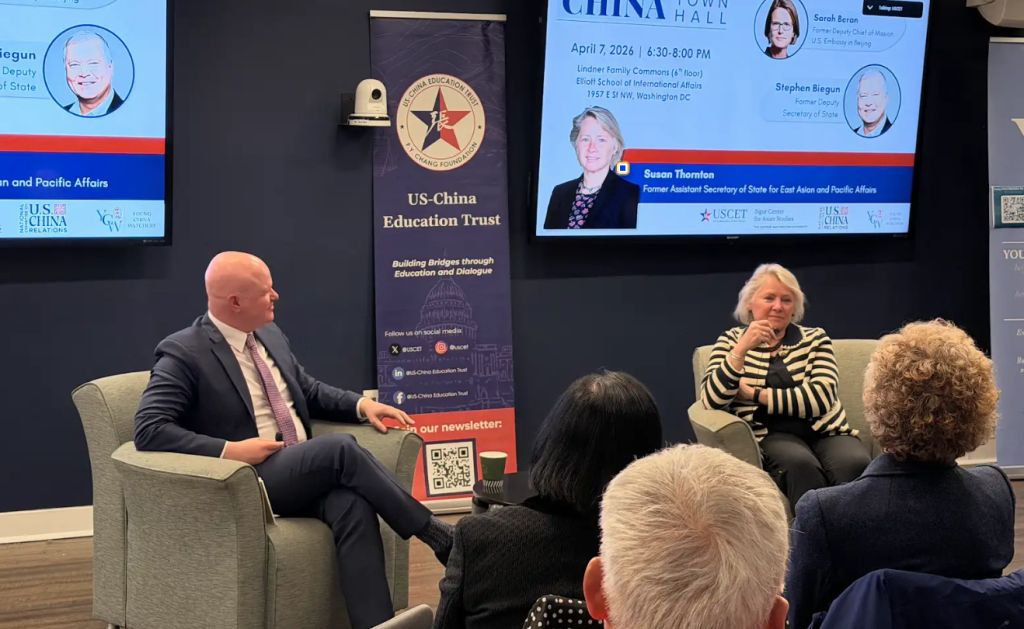
Thornton used the occasion to address structural questions the Town Hall had left somewhat underexplored. She expressed concern about the erosion of China expertise across the U.S. government — noting that the current administration is “basically gutting” regional expertise at the State Department at precisely the moment deep knowledge is most needed. She found it promising that Biegun had framed this as a national security issue and expressed hope that his voice might help build political will to reverse the trend.
Thornton also cautioned against the obsessive short-term focus on tariff rates, arguing that the more consequential question is how the United States and China will together shape the trajectory of AI — a disruption that will dwarf the original China Shock. “These two countries are going to determine the future of AI and how that impacts our two societies,” she said, “and I don’t see us focusing on that.”
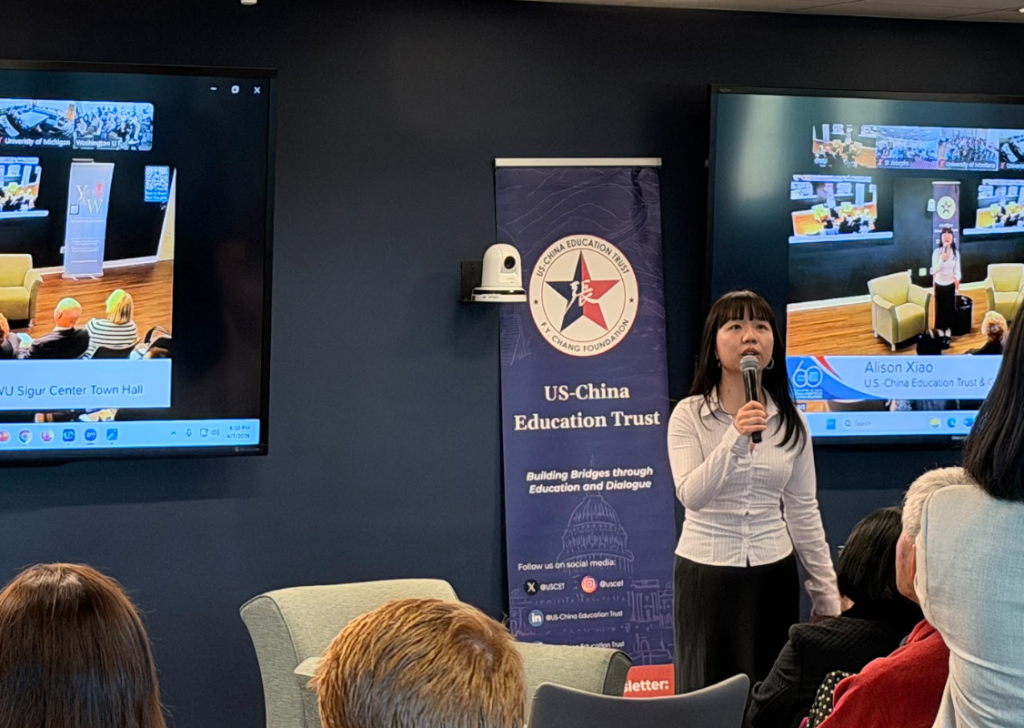
The Q&A session surfaced a rich set of questions from the diverse audience.
On Chinese tech products, Thornton pointed to TikTok as the defining test case — a collision between national security concerns and consumer demand that will recur across EVs, AI models, and beyond. On talent and immigration, she argued that the risk-reward calculus is not being correctly applied when security concerns are used to justify blanket restrictions on Chinese students and researchers, noting that attracting global talent has always been one of America’s core competitive advantage.
The evening closed on a reflective note. Asked what original assumption about China she has had to revise over the course of her career, Thornton offered a sweeping answer: the longer she has worked on China, the more similarities she sees between the two countries — in both their strengths and their vulnerabilities.
“I’m hoping that we can channel the good similarities, and avoid coming down at the same time in the same place in the bad ones.” – Susan Thornton
Speaker Biographies
SpeAkers (virtual)
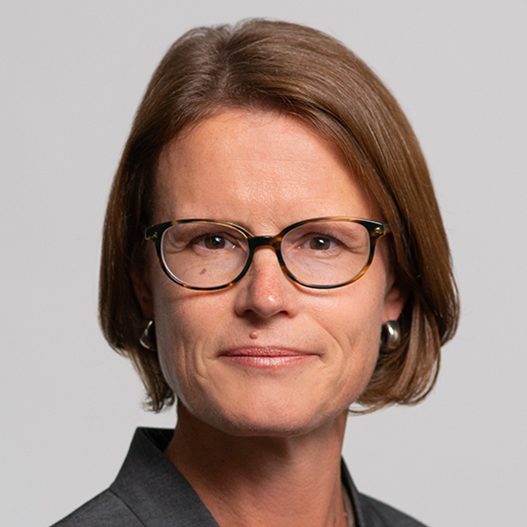
Sarah Beran is a partner at Macro Advisory Partners, joining the firm in 2025 following a distinguished career in the U.S. Foreign Service, most recently as deputy chief of mission at the U.S. Embassy in Beijing.
From 2022 to 2024, Ms. Beran served as senior director for China and Taiwan Affairs at the White House National Security Council. Her portfolio encompassed technology export controls, investment screening, trade policy, counternarcotics, Russia sanctions and Taiwan contingency planning. She led strategic preparations for multiple heads-of-state summits, negotiated the reopening of senior diplomatic channels with Beijing, and helped forge the first U.S.-China understanding on AI safety in the context of nuclear command and control.
Ms. Beran also served as then-U.S. Secretary of State Anthony Blinken’s deputy executive secretary for the Indo-Pacific, led the office responsible for U.S. engagement in APEC, and served as former U.S. Secretary of State Mike Pompeo’s director of the office of Chinese and Mongolian Affairs. She was posted overseas in Beijing, Islamabad, Jerusalem, and Quito. Her previous domestic assignments include office director for economic policy in the Bureau of East Asian and Pacific Affairs, special assistant to then-Secretary of State Condoleezza Rice, and Lebanon desk officer.

Stephen Biegun has more than three decades of international affairs experience in government and the private sector, including high-level government service with the Department of State, the White House, and the United States Congress. In 2021, Mr. Biegun concluded his most recent government service as the Deputy Secretary of State, to which he was confirmed by the Senate with a strong bipartisan vote of 90-3. In addition to his government service, Mr. Biegun has also served as a corporate vice president with Ford Motor Company and The Boeing Company.
Mr. Biegun began his career as a foreign policy specialist with the United States Congress, with a focus on Russia, the former Soviet Union, and Europe, ultimately rising to a number of senior-level positions including chief of staff of the Senate Foreign Relations Committee and as the national security advisor to Senate Majority Leader. He spent two years as the Executive Secretary of the White House National Security Council, serving as an advisor and deputy to the National Security Advisor. In the early 1990s, Mr. Biegun led a Moscow-based technical assistance program working closely with Russia’s first post-Soviet government.
Speaker (In Person)
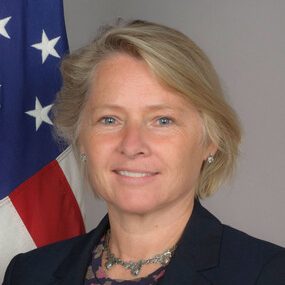
Susan A. Thornton is a retired senior U.S. diplomat with almost three decades of experience with the U.S. State Department in Eurasia and East Asia. She is currently a Visiting Lecturer in Law and Senior Fellow at the Yale Law School Paul Tsai China Center. She is also the director of the Forum on Asia-Pacific Security at the National Committee on American Foreign Policy and a nonresident senior fellow at the Brookings Institution.
Until July 2018, Thornton was Acting Assistant Secretary for East Asian and Pacific Affairs at the Department of State and led East Asia policymaking amid crises with North Korea, escalating trade tensions with China, and a fast-changing international environment. In previous State Department roles, she worked on U.S. policy toward China, Korea and the former Soviet Union and served in leadership positions at U.S. embassies in Central Asia, Russia, the Caucasus and China.
Moderator
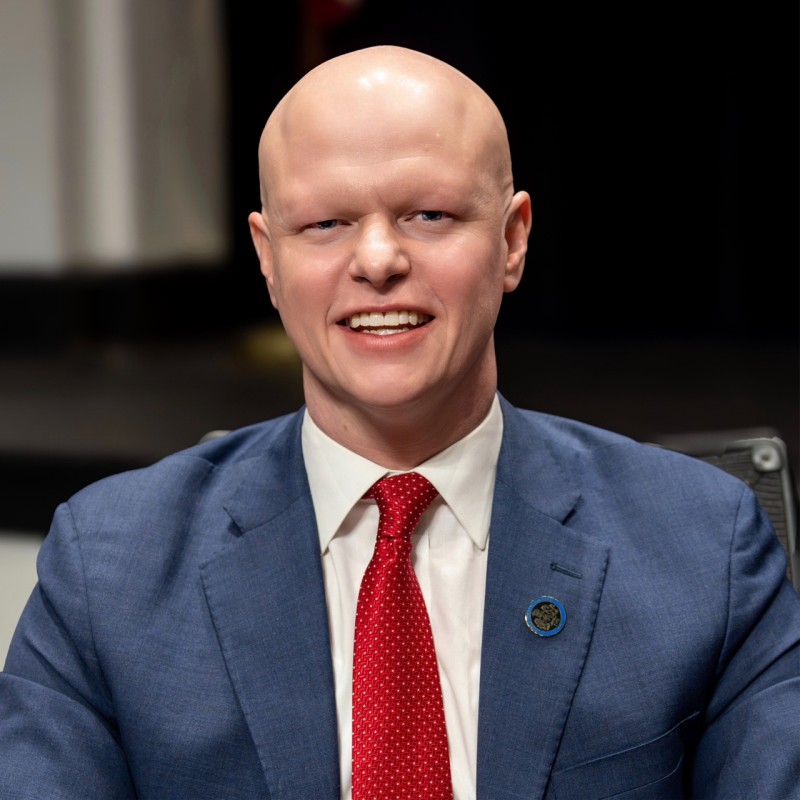
Ryan McElveen (麦瑞安) serves as managing director of US-China Education Trust, where he oversees organization operations, programming, communications, and development. He also serves as a nonresident fellow at the Centre on Contemporary China and the World (CCCW) at the University of Hong Kong (HKU).