
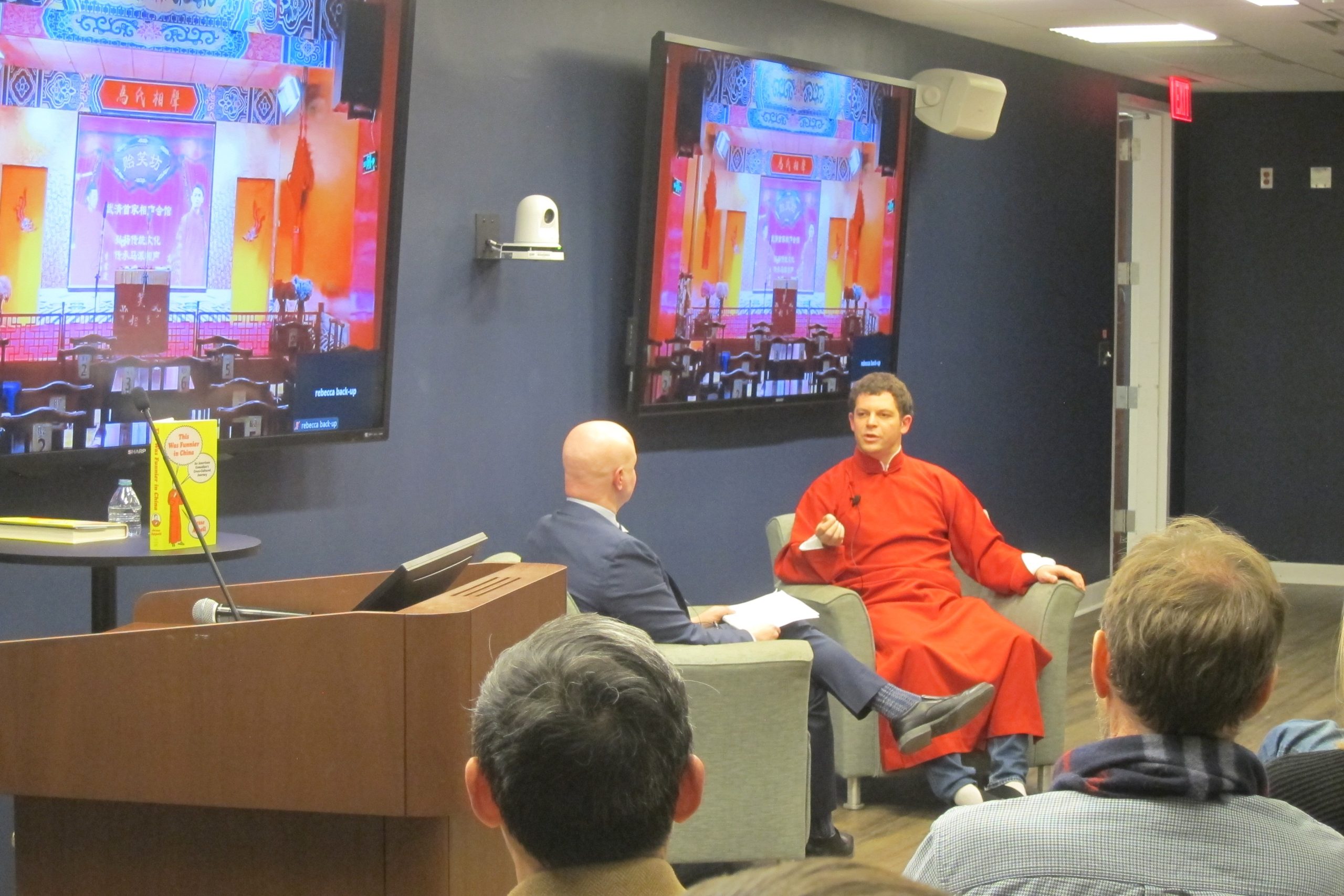
On February 9, USCET partnered with Young China Watchers to host the latest installment of the China Connections series, “This Was Funnier in China: A Comedy Show and Book Launch with Jesse Appell.” The evening brought together comedy, culture, and conversation as comedian Jesse Appell engaged in a traditional xiangsheng performance to celebrate the launch of his new book, This Was Funnier in China: An American Comedian’s Journey to Make China and the West Laugh With Each Other, Not at Each Other.
Jesse is a bilingual comedian and social media creator followed by over 3 million people across China and the West. In 2012, he won a Fulbright Fellowship to apprentice under Master Ding Guangquan (丁广泉), one of China’s top comedians and the only traditional xiangsheng (相声) master to accept foreign disciples.
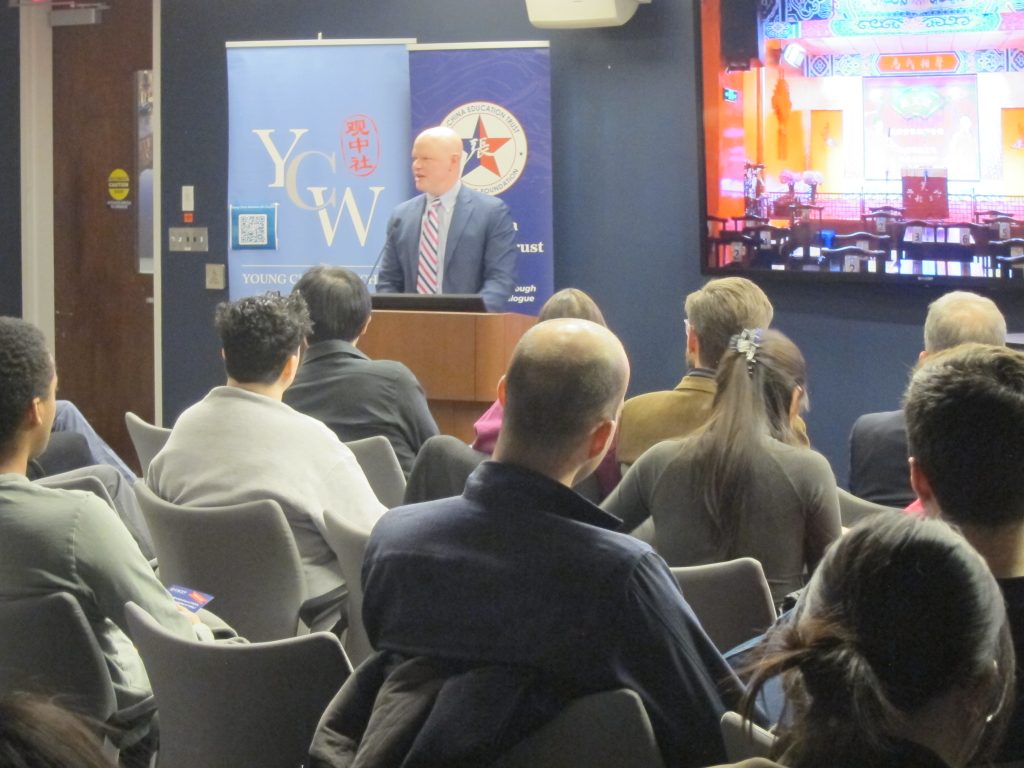
USCET Managing Director Ryan McElveen opened the program, introducing the China Connections series and thanking Young China Watchers for their partnership. Young China Watchers co-director Sasha Chopenko followed with remarks on supporting the next generation of China-focused professionals.
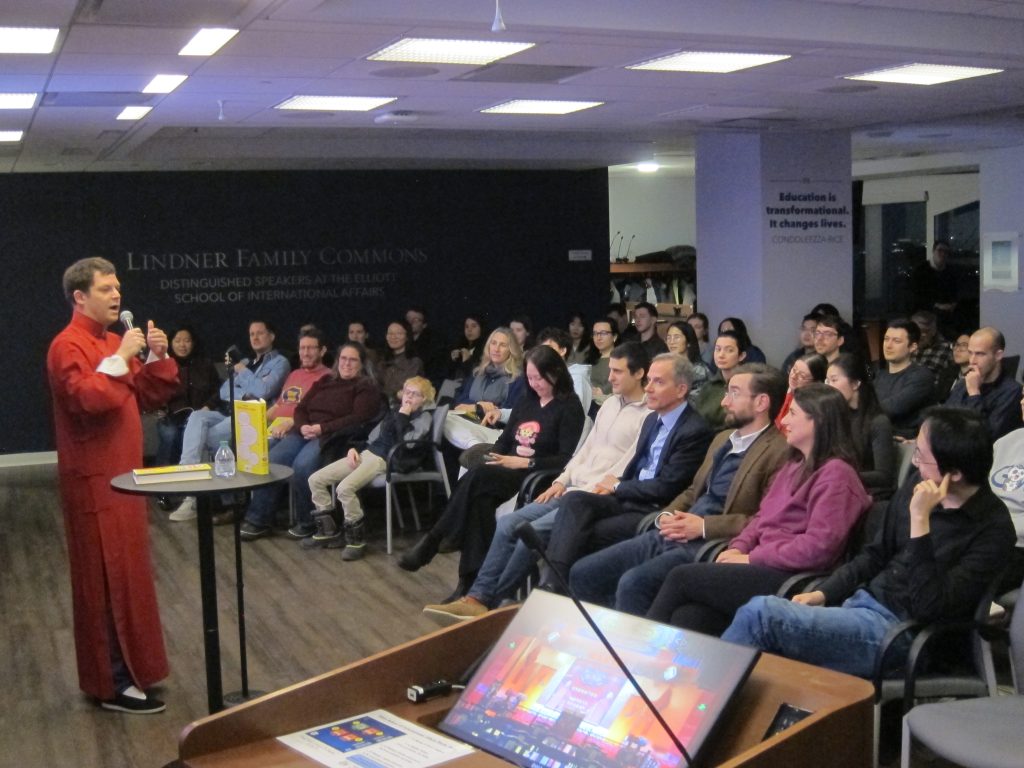
Jesse performed a 45-minute English-language xiangsheng set in an innovative solo format, interacting with pre-recorded dialogue of his younger self. Through stories about learning xiangsheng and Master Ding’s unwavering dedication to the art form, he demonstrated how humor transcends cultural boundaries.
Fireside chat between Jesse Appell and Ryan McElveen
On his career path and early days in China: McElveen asked about Jesse’s original aims and whether he thought a career in comedy would be viable. Jesse recalled his first time in China while studying abroad, when he learned 100 Chinese characters daily for six months. By the end, he could “kind of be myself again in the second language” and discovered China’s underground standup and improv scene. “In 2012, nobody in China had ever heard of standup comedy,” he noted. The Fulbright Fellowship gave him a year to explore, and he decided to continue on if he could match an English teacher’s salary. Through company galas, comedy workshops, and Royal Caribbean cruise ship performances for Chinese tourists, he made it work.
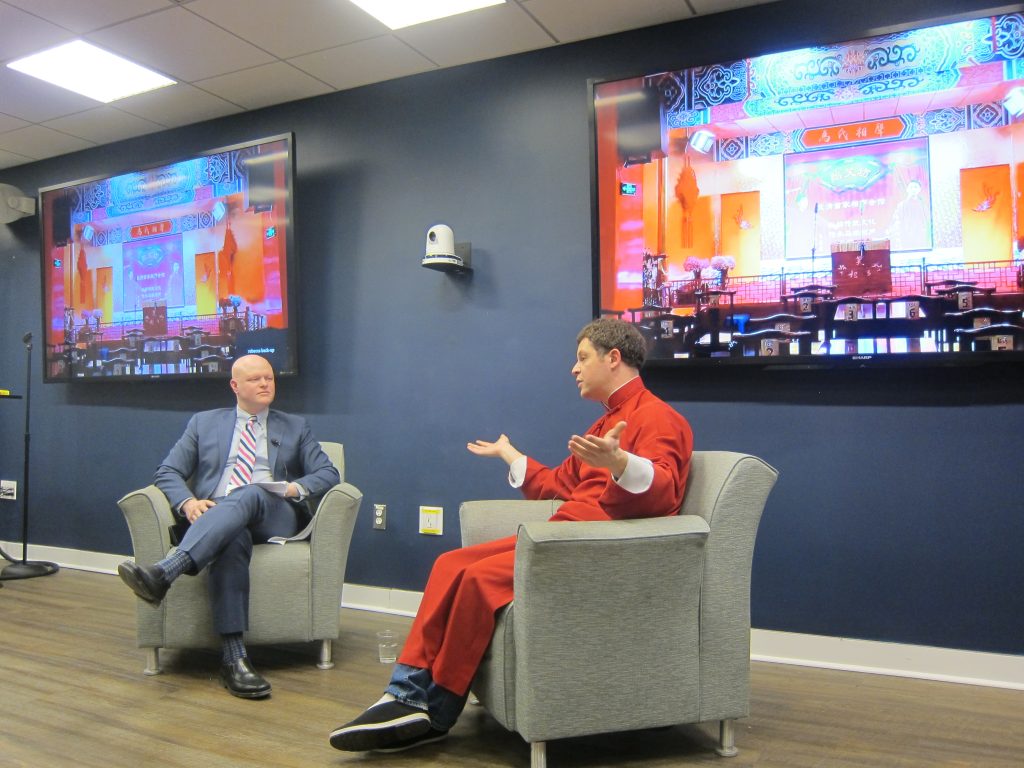
On the Fulbright program’s impact: Jesse emphasized the program’s transformative role: “I don’t think I would have had the confidence to do this without Fulbright.” Beyond funding, it provided “a seal of approval that the work mattered and that the cultural exchange mattered.” The researcher’s identity proved invaluable — when jokes bombed, he’d ask “why didn’t that work?” rather than judging whether Chinese comedy was “good” or “bad.” He expressed deep concern about the suspension of the Fulbright and Peace Corps programs in China since 2020.
On advice for young professionals in the U.S.-China field: Jesse acknowledged the difficulties but remained optimistic: “I just can’t believe that the two biggest, most powerful, richest nations in the world are going to isolate each other over petty squabbles forever.” He encouraged people to go to China if possible, noting opportunities still exist but aren’t published on English-language websites.
“When you meet the real people, when you do the people-to-people thing, there’s almost never conflict.”
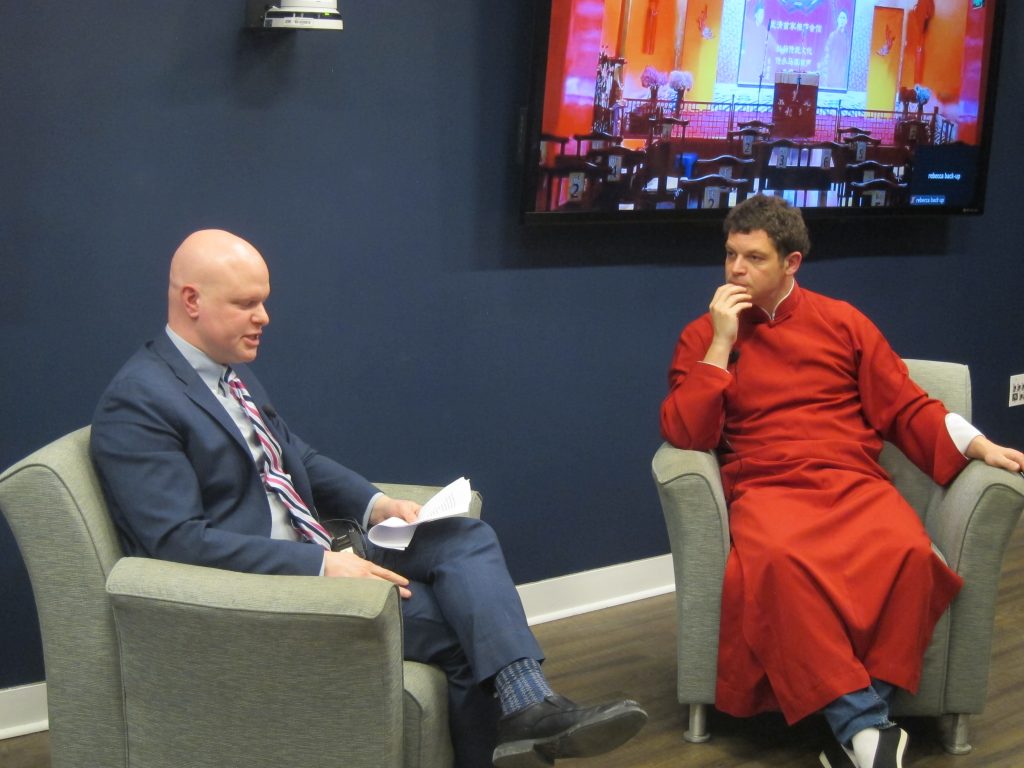
On how comedy shaped his understanding of U.S.-China relations: Jesse explained that Master Ding taught him “comedy comes from life,” so to laugh with somebody, “you really need to put yourself in their shoes.” Unlike poetry, where applause comes regardless, “you can’t fake the laughter.” What people laugh about — rent, bosses, commuting — reveals genuine cultural truths. This apolitical approach creates a connection without requiring agreement on geopolitical positions.
On making China and the West laugh with each other, not at each other: Jesse was pragmatic. He proposed cultural exchange as “a hedge” against conflict, asking for just 1 percent of the U.S. defense budget to support people-to-people programs.
“Everything else doesn’t look like it’s working.”
On differences between Chinese and Western comedy: While consuming alcohol at shows in China isn’t typical, Chinese audiences appreciate comedy that dances along the edge — clever and daring, but not offensive or over-the-top. They also understand relationship dynamics more uniformly. When he started in 2012, audiences didn’t understand the standup format. Now, with standup across 50+ Chinese cities, tastes have evolved rapidly, though televised comedy tends to follow a setup-punchline structure due to requirements for submitting scripts in advance.
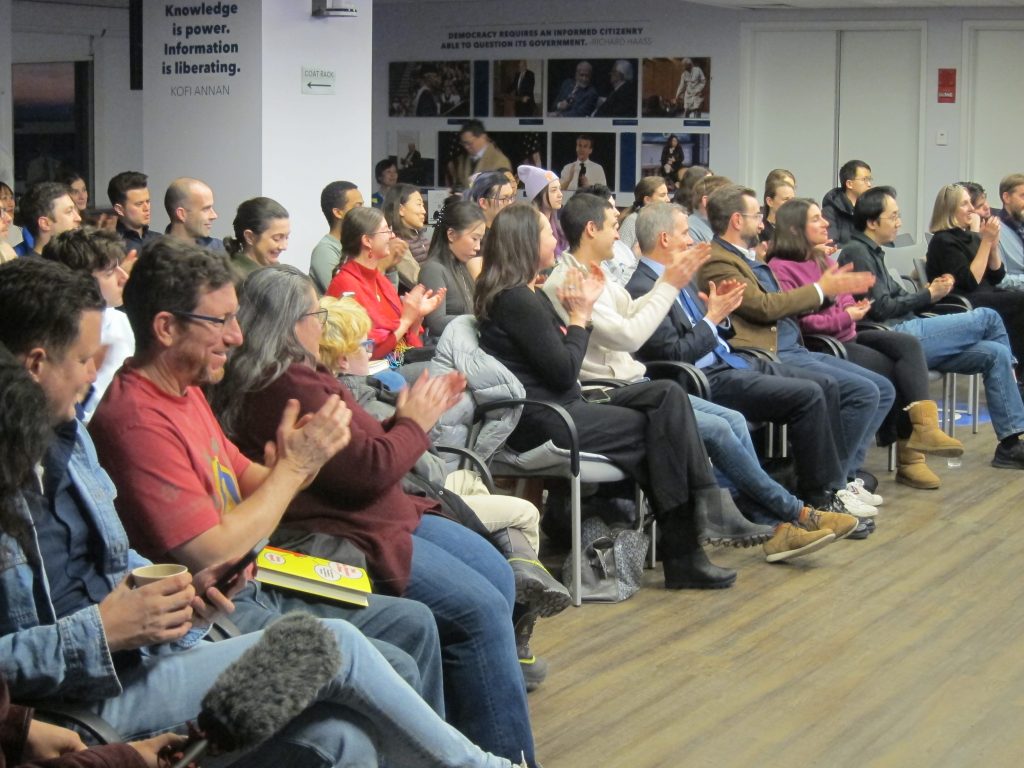
On what’s next: Jesse discussed his tea business, which emerged during COVID and has gained 1.5 million followers. “Tea and comedy are about talking about the world,” he explained. Both create spaces for genuine connection. He emphasized that whatever your passion is, be it skateboarding, urban design, or even knitting, cultural bridges emerge naturally: “If you know somebody who’s really into skateboarding and they go to China and hang out with skateboarders, all of a sudden, nobody’s thinking about currency manipulation.”
Attendees asked about censorship systems for live shows in China and whether treatment differs for Westerners. Jesse explained that most censorship is self-censorship resulting from environmental pressure. The Chinese system creates challenges but also drives creative innovation as comedians adapt to find spaces where expression is possible.
McElveen closed by highlighting how Jesse’s work exemplifies USCET’s mission of promoting people-to-people diplomacy. The evening concluded with a book signing and reception.
Speaker Biographies
Speaker
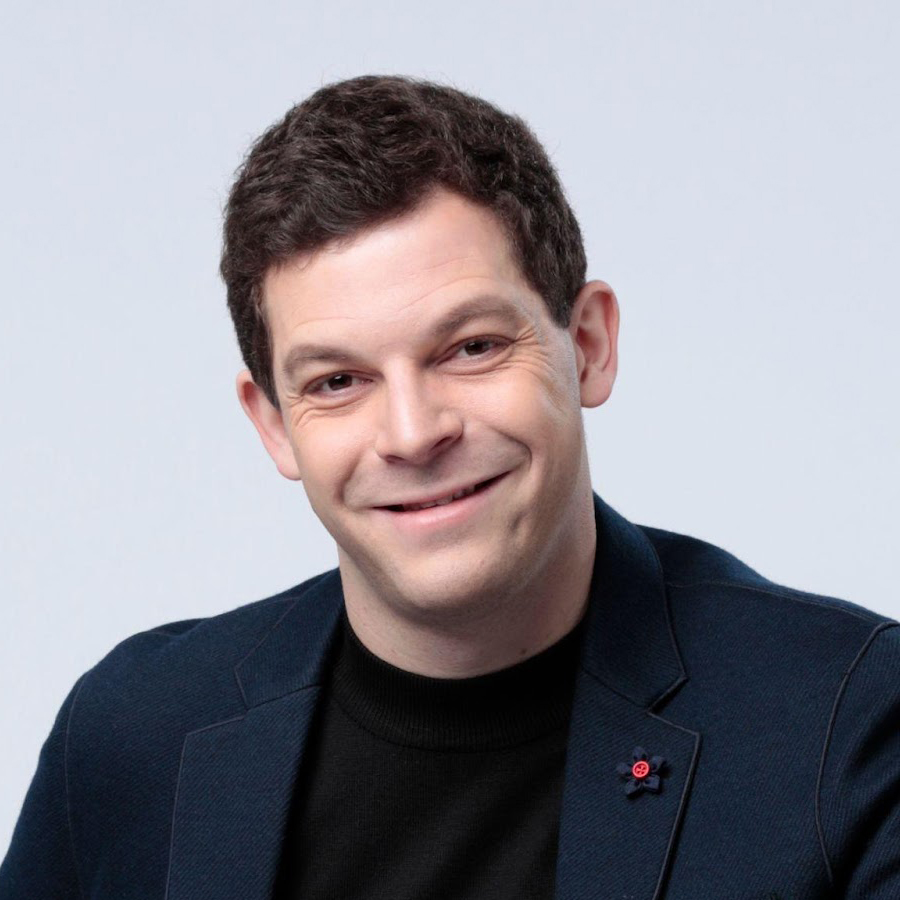
Jesse Appell is a bilingual comedian, author, social media creator, and entrepreneur followed by over 3 million people in both China and the West. His appearances on Chinese TV shows, such as “Huan Le Xiju Ren (欢乐喜剧人)” and his comedy fundraisers during COVID-19, have led to over 500 million total views of his comedy videos around the world.
In 2012, Jesse won a Fulbright Fellowship to move to Beijing and research Chinese traditional xiangsheng comedy, apprenticing to Master Ding Guangquan, one of the top comedians in China and the only traditional comedy master to take foreign disciples. Over the following decade, he played a role in the rise of the modern comedy scene in China, a story chronicled in his new book, This Was Funnier in China.
Jesse is also the founder of Jesse’s Teahouse, an online tea culture video channel and e-commerce website, and is a leader in bringing Chinese tea culture to the West.
Moderator
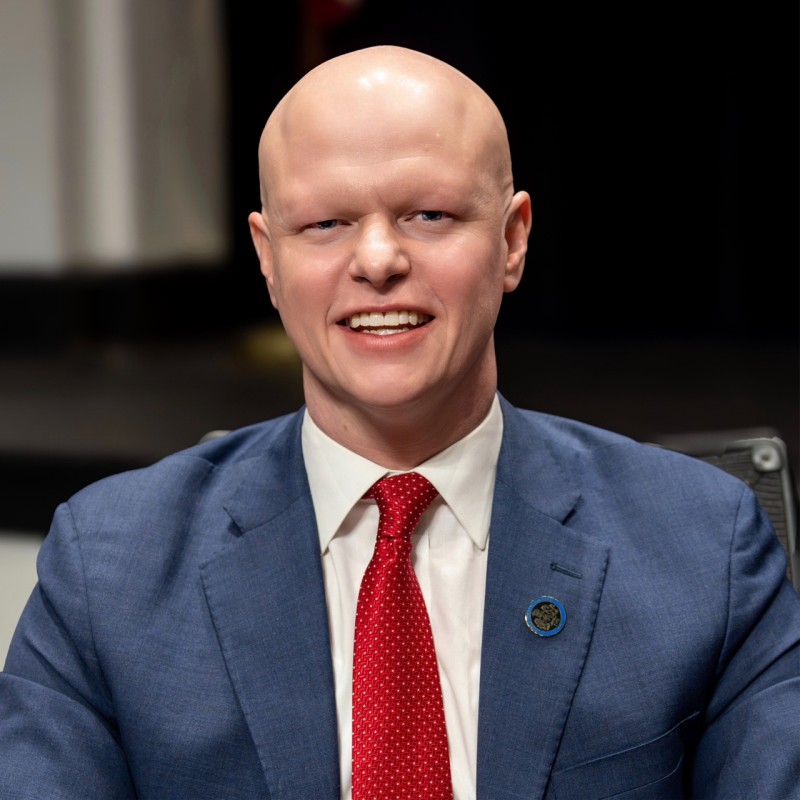
Ryan McElveen (麦瑞安) serves as managing director of US-China Education Trust, where he oversees organization operations, programming, communications, and development. He also serves as a nonresident fellow at the Centre on Contemporary China and the World (CCCW) at the University of Hong Kong (HKU).
China Connections
Why should Americans be interested in China? USCET launches China Connections, a new monthly series hosting discussions with experts to explore their work, gain insights into current events, and learn what a career in the China field looks like today. These events highlight individuals with unique expertise on China to provide students, young professionals, and members of the public a deeper understanding of current events and increase American student interest in pursuing a focus on China. These events are mostly held in person at George Washington University with online engagement.