
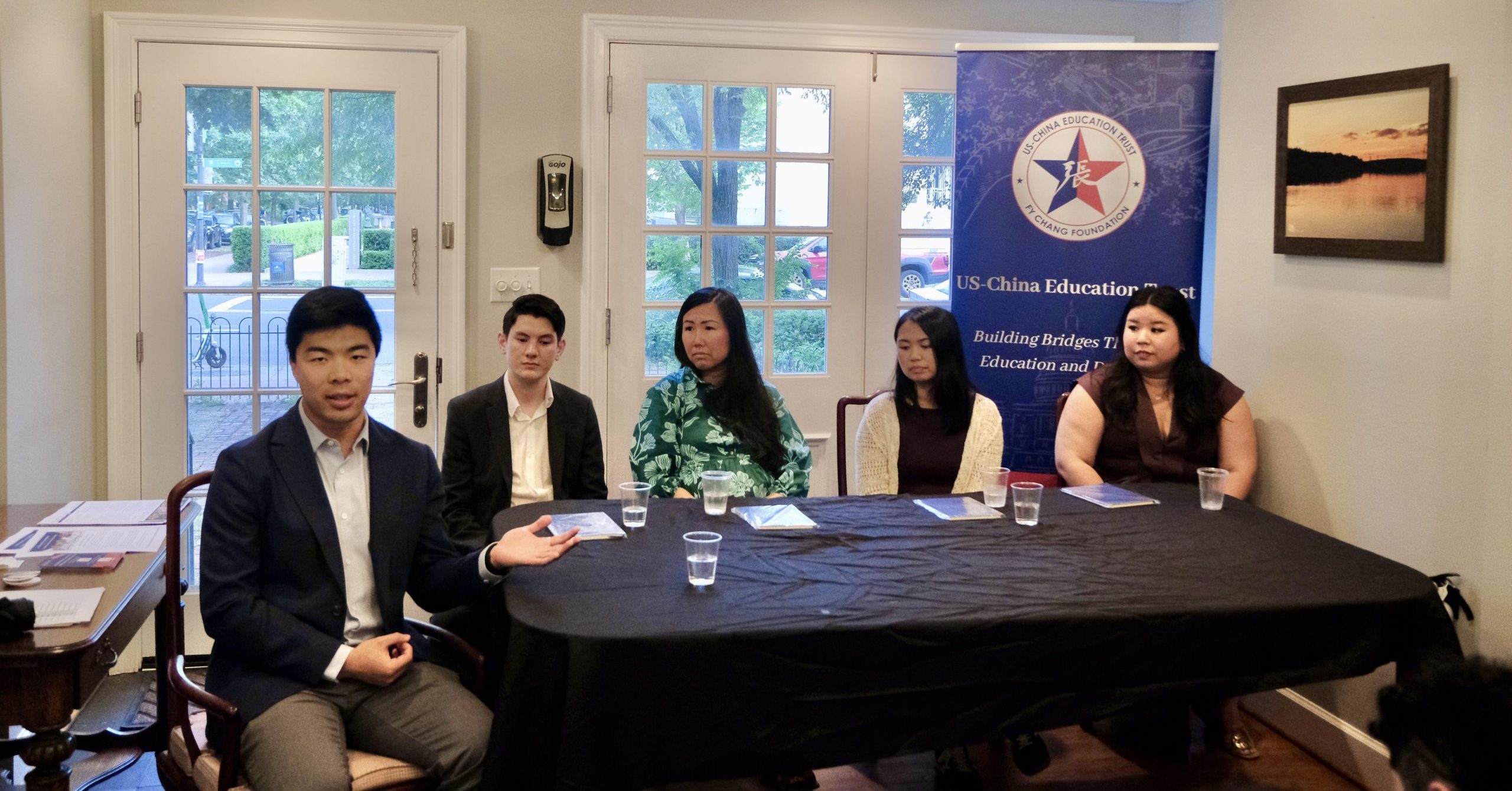
On May 27, U.S.-China Education Trust (USCET) and the US-Asia Institute co-hosted an in-person panel discussion featuring four Asian American professionals shaping policy on Capitol Hill in celebration of Asian American and Pacific Islander Heritage Month. Moderated by Nicholas Wu, congressional reporter at Semafor, the event explored how policy is made in Congress, what AAPI representation looks like in the legislative branch, and how young professionals can build meaningful careers in legislative politics and policymaking.
The panelists — Allison Dong, Tiffany Ge Elzey, Jason Li, and Catalina Tam — brought experience from across the House, Senate, and congressional committees. Together they shared how their Asian American identities have uniquely shaped their career paths in Congress.
USCET Executive Director Rosie Levine opened the evening by introducing USCET’s recent work on Asian American affairs. She then introduced Wu, who kicked off the conversation around the professional realities of congressional work and the personal dimensions of navigating the Hill as AAPI staffers and public servants.
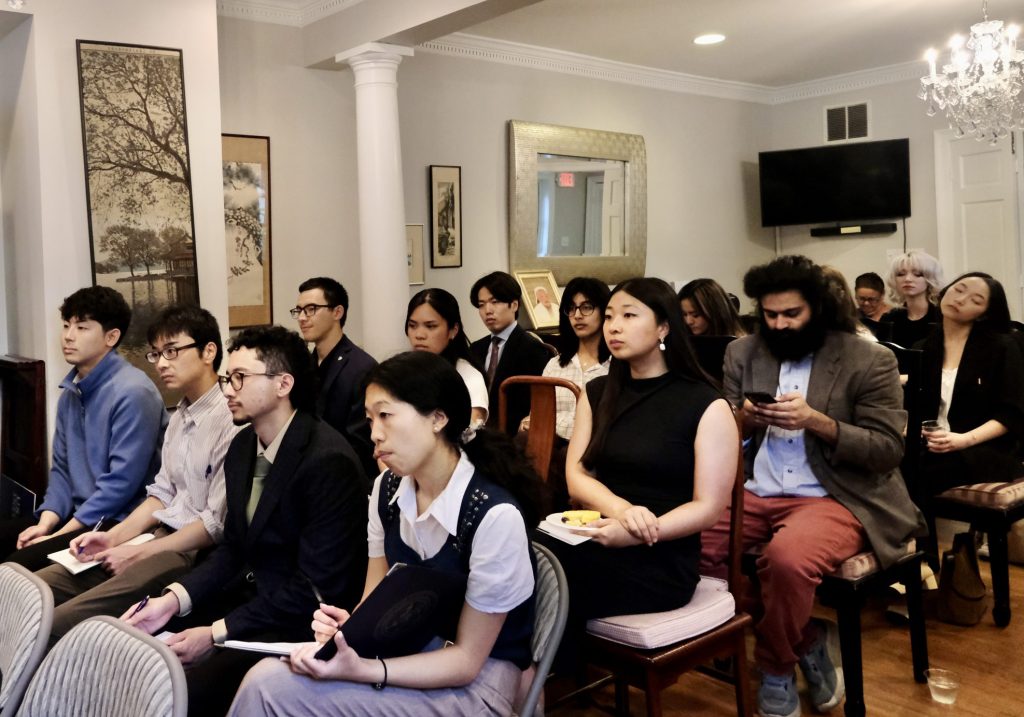
The discussion began with each panelist reflecting on their work. Li spoke about working with Congressman Ro Khanna, particularly during moments of crisis, such as how to smoothly run a committee hearing when members of Congress are absent. His work on the House Select Committee on the CCP has also allowed him to apply the knowledge he gained from his prior think tank experience, where his research focused on U.S.-China relations, Cross-Strait issues, and Indo-Pacific strategy.
Tam echoed a similar point by emphasizing that congressional work requires not only policy knowledge but also “street smarts” — staffers must learn to handle different personalities, respond to changing circumstances, and adapt quickly in a workplace where no two days look the same. Ge Elzey added that the uncertainty of political work is itself a lesson. Congressional jobs are shaped by elections, seasonal leadership changes, and shifting power dynamics, so staffers should make the most of their time on the Hill by absorbing expert-level knowledge, attending briefings, and building relationships while they have access to the institution.
Dong, speaking from a communications perspective, shared that changes in party control can affect how much influence staffers have over hearings, messaging, and the broader congressional agenda. When a party is in the minority, staff may have less control over which topics receive attention. At the same time, she noted, elections can also prompt staffers to reassess where they want to go next — whether that means staying in their current offices, moving to another role on the Hill, or pursuing opportunities beyond Congress. Tam also shared that being a minority makes it especially important to seek out community, as there is still a broader network on the Hill that can offer support, guidance, and solidarity.
Li reflected on his family background and identity. His father is a Taiwanese immigrant, and his grandparents were part of the Nationalist migration to Taiwan from mainland China during World War II. Although Li said he identifies primarily as American, his Chinese and Taiwanese heritage has still shaped moments in his professional life. Li’s interactions with officials from mainland China and Taiwan carried a sense of familiarity, but also highlighted the complexity of identity when personal background intersects with diplomatic and policy work.
“There’s always that interesting diplomatic connotations, which they (embassy officials) feel like I’m an insider…but also knowing that I’m an American first and foremost” – Li
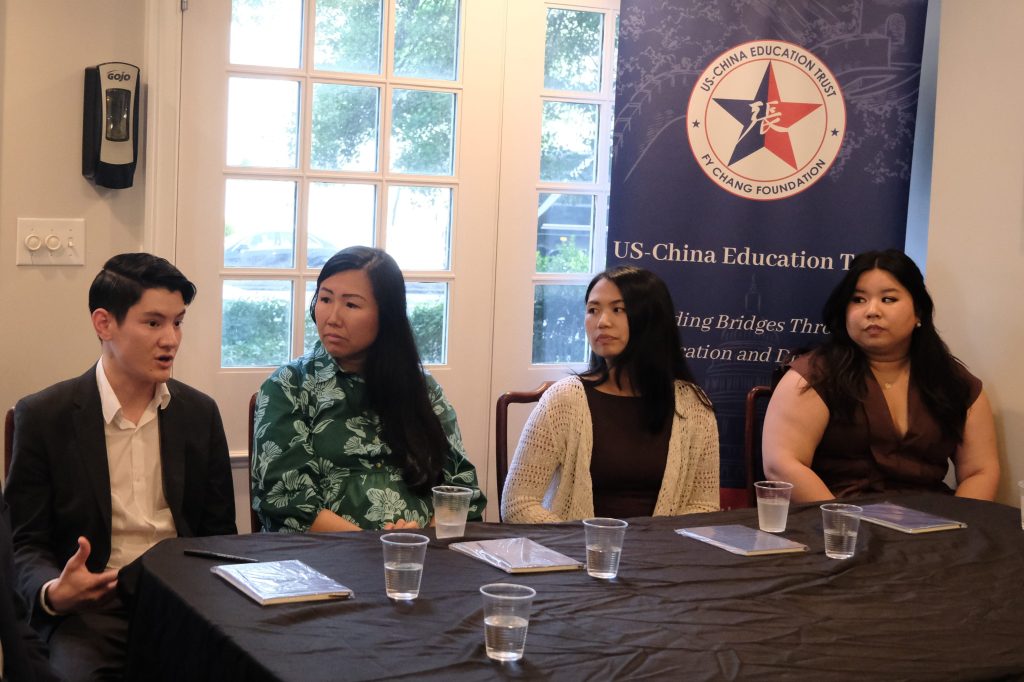
Ge Elzey offered a concise reminder that diversity matters, but so does competence. Representation is meaningful, but it must be paired with the ability to do the work well. Dong emphasized the importance of building community among Asian Americans across political parties. Across the conversation, the panelists made clear that identity can be a source of perspective, connection, and responsibility — but it is also only one part of the broader work of public service.
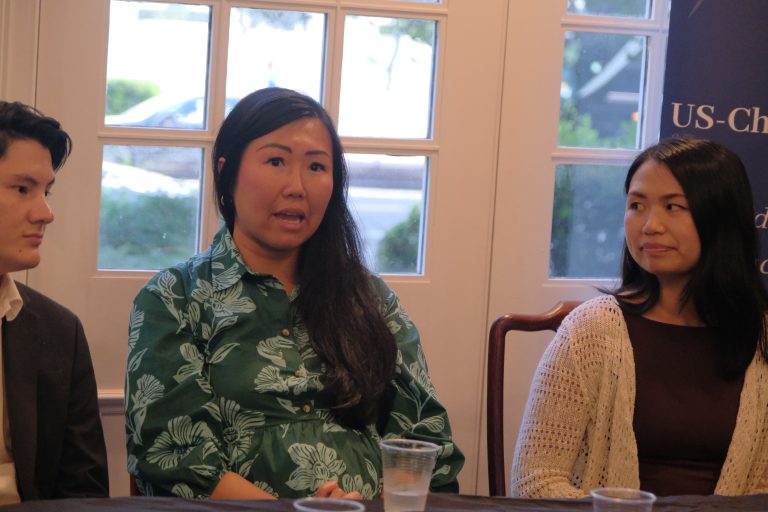
“Having diversity is always great…but you also want to have people who can take senior roles in office…instead of simply checking off boxes”
– Ge Elzey
On work-life balance, Ge Elzey acknowledged that congressional work can involve long hours, but noted that those extra hours can also create opportunities for team-building and stronger staff relationships. Dong and Tam added that many Hill staffers are drawn to the excitement and unpredictability of the job. The pace can be demanding, but recess periods and the constant variety of the work can also help sustain people who enjoy a fast-moving environment.
When asked what they had learned or what they would have done differently, the panelists offered practical and candid advice. Dong encouraged attendees to seize every networking opportunity, sharing that she found her second job through a cafeteria meeting during a prior internship. Ge Elzey reminded students that it is acceptable to say no and that they do not need to attend every event. Tam said she wished she had spent more time appreciating the friends, mentors, and colleagues who helped her along the way. Li reflected that he had learned to listen and learn more, rather than trying to be an authoritative voice in every setting. No one, he noted, can be an expert on everything.
During the Q&A, students asked how interns can make the most of their time in Congress. In response, speakers suggested that interns be proactive in connecting both internally within their teams and externally across the Hill, and to circle back with their networks every few months so that when opportunities arise, they are remembered.
“It is not only who you know, but who knows you — and who is willing to vouch for you.” – Catalina Tam
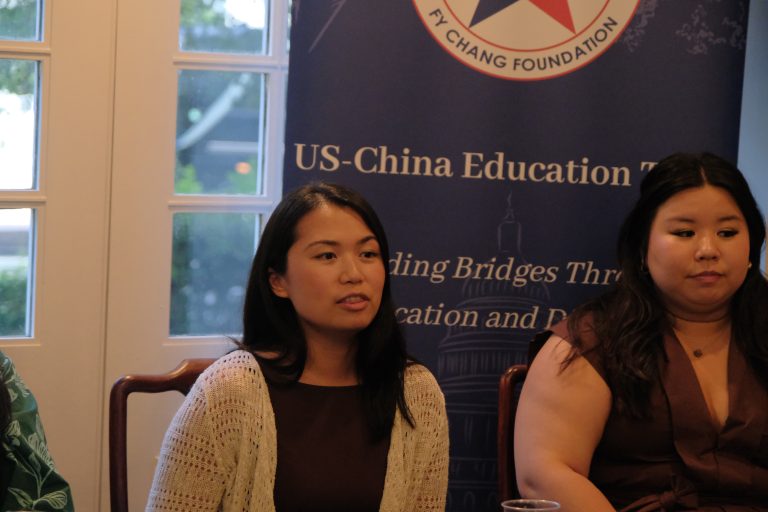
Li urged students to take full advantage of their access to the Capitol complex: “Get lost in the Capitol building!” he added.
The panelists also discussed how young staffers can position themselves for promotion. Dong encouraged them to always offer help, whether through drafting memos, conducting research, or taking on additional projects. Tam emphasized the importance of advocating for oneself. Strong work matters, but so does making sure others understand what one is capable of contributing.
Another question focused on how to make information accessible in a media-saturated environment. Dong explained that communications work requires breaking policy down into the simplest possible terms and using language that reflects the voice of the member of Congress or resonates with constituents in a state or district. Staffers do not need to enter their jobs as experts, she noted. Much of the learning happens on the job, and prior experiences can become useful in unexpected ways. Her own experience at USAID and the State Department helped shape how she approached congressional communications.
USCET Administrator David Yao asked how staffers continue to reach across the aisle amid intense partisan polarization. Dong emphasized that bipartisan outreach remains important because consensus is central to how Congress functions. Tam added that respect is essential, especially in an environment full of disagreement. Staffers must remember that there is life beyond work and that humanizing one another remains necessary even when political differences are sharp.
USCET Managing Director Ryan McElveen closed the evening by thanking the panelists, moderator, attendees, and the US-Asia Institute, and by underscoring the importance of USCET’s work on Asian American affairs. The conversation ended on a note of encouragement. Capitol Hill can be unpredictable, competitive, and demanding, but it is also a place where young professionals can learn quickly, build meaningful networks, and contribute to public service. For AAPI professionals in particular, the panelists’ reflections made clear that identity, competence, community, and humility all matter. Their advice to students was straightforward: be proactive, stay curious, listen carefully, advocate for yourself, and remember that success in Congress depends not only on what you know, but also on how you build trust with the people around you.
Speaker Biographies
Moderator
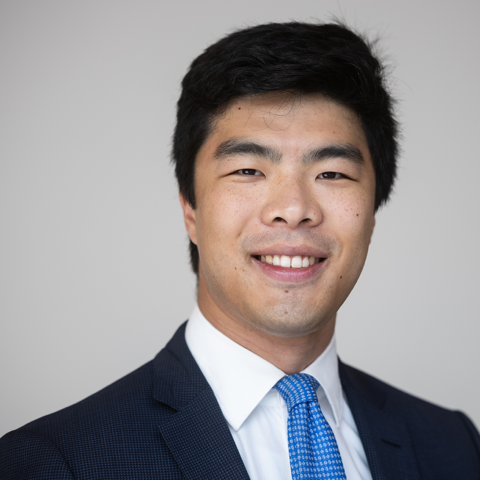
Nicholas Wu is a congressional reporter at Semafor, with a focus on the House of Representatives. In his roughly six-and-a-half years of covering Capitol Hill, he’s covered President Trump’s impeachment trials, the fallout from the January 6, 2021 Capitol insurrection, multiple megabills, and the 2024 election, among many other issues on the Hill. He previously worked as a Congressional Reporter at POLITICO and at USA TODAY and as a fellow at National Journal. He is a graduate of Princeton University, having majored in the School of Public and International Affairs and minored in East Asian Studies and American Studies.
Panelists
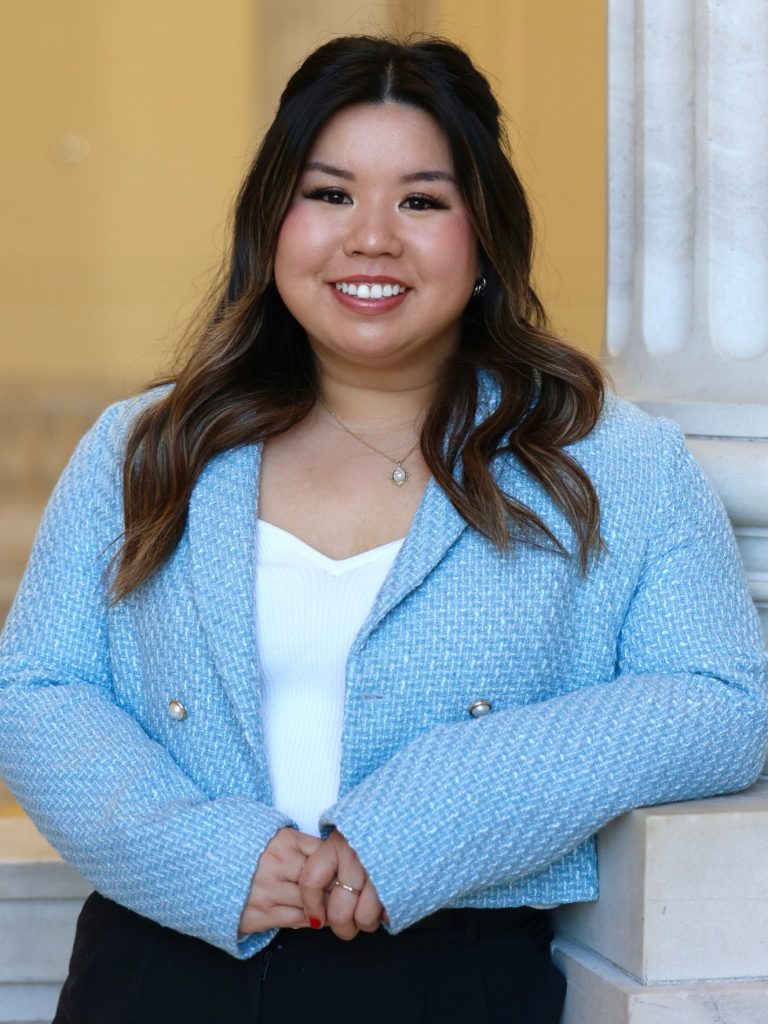
Allison Dong is a senior communications advisor for the House Budget Committee under Chairman Jodey Arrington (R-TX). She previously served as communications director for the Senate Special Committee on Aging under Ranking Member Mike Braun (R-IN) and held communications roles in the offices of Senator Braun and Senator Marsha Blackburn (R-TN). Prior to Congress, she was a Department of Defense fellow and a State Department intern at the U.S. Consulate in Guangzhou. She graduated from Indiana University with a bachelor’s degree in international studies and minors in Chinese and Asian American Studies.
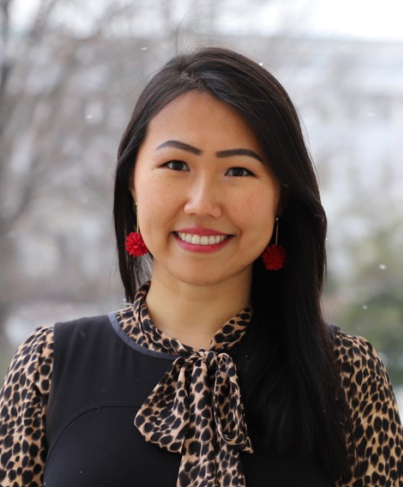
Tiffany Ge Elzey is a staff director, policy director, and general counsel to Senator Mitch McConnell (R-KY). Prior to her service in the Senate, Ge practiced business litigation and appellate law as an associate at Frost Brown Todd in Louisville, Kentucky, with a focus on antitrust, securities litigation, franchise disputes, and financial institution litigation. A native of Louisville, she holds two summa cum laude bachelor’s degrees from the University of Kentucky in Economics and Political Science, with minors in International Business and International Relations, and earned her J.D. from The George Washington University Law School.
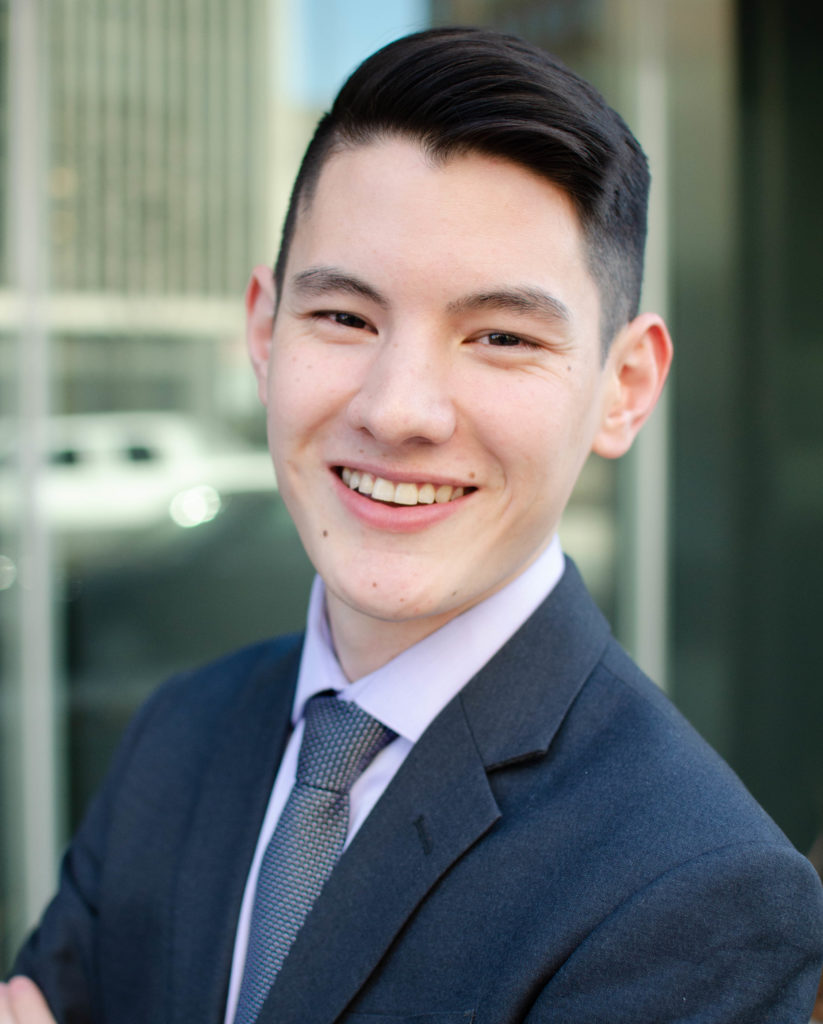
Jason Li is a Democratic professional staff member with the Select Committee on the CCP, working on behalf of Ranking Member Ro Khanna. His portfolio covers diplomacy, development, human rights, and Taiwan. In this capacity, he engages with national security leaders in Congress and conducts oversight of the executive branch. Prior to joining the Select Committee, he was a research associate with the East Asia Program at the Henry L. Stimson Center, a global security think tank in Washington. His research focused on U.S.-China relations, cross-Strait relations, grand strategy in the Indo-Pacific, and China’s approach to conflict issues in its periphery and the Middle East. Prior to Stimson, Jason interned with the Center for Strategic and International Studies’ Freeman Chair in China Studies. He holds a B.A. from McGill University where he graduated with first class honours in Political Science.
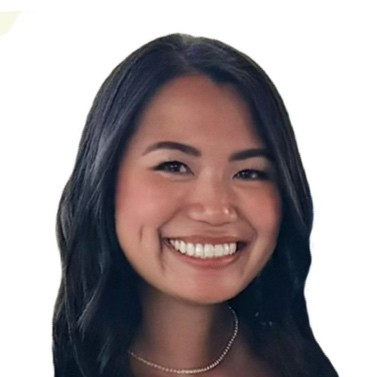
Catalina Tam serves as nominations director to U.S. Senate Democratic Leader Chuck Schumer (D-NY), where she leads the executive and judicial nominations process. She has held this role during the Biden and Trump Administrations, guiding the Democratic Caucus strategy for Cabinet secretaries, ambassadors, judges, and federal board and commission appointees. She previously served on the Leader’s education and labor policy team, and as a staffer in the House of Representatives. Before coming to Capitol Hill, she worked on a congressional campaign and was a Fulbright Scholar in Taiwan. She graduated cum laude with a Bachelor of Arts in Political Science with a concentration in International Relations from the University of California, Berkeley.